Central Park has 843 acres of trails, lawns, and lakes. And somewhere in all of that, it quietly holds 36 bridges. Most student groups walk past them without a second look. That’s a mistake.
The bridges of Central Park are an integral part of its design. Frederick Law Olmsted and Calvert Vaux built this park with intention, and the bridges were a big part of it. Each one tells a story. Each one is a photo, a history lesson, an architecture moment, all packed into a short walk. For teachers planning a group trip to NYC, this is the kind of stop that students actually remember.
Here’s a proper look at the bridges in Central Park, NY, that are worth putting on the itinerary.
Groups that want a fuller picture of the park beyond its bridges can also check out this guide on the things to do in Central Park to build out the rest of the day.
Why Central Park’s Bridges Work So Well for School Groups
Think about it. What’s the one thing most NYC school trips have in common? Too many crowded museums. Not enough breathing room.
Olmsted and Vaux had a strong conviction that structures in the park had to serve a park purpose. That philosophy shows. The bridges aren’t random. They’re spaced out, set into the landscape, and designed to feel like a natural part of the walk. Which means your group moves through them at a good pace without bottlenecks or long waits.
Plus, between 1859 and 1866, 27 arches and bridges were built in Central Park. Each one was designed by Vaux, often with the help of architect Jacob Wrey Mould, and each one is unique in material, style, and placement. That kind of variety keeps students engaged. You’re not looking at the same thing twice.
Quick Reference: Central Park Bridges for Student Tours
Bridge | Built | Material | Best For | Location |
Bow Bridge | 1862 | Cast iron | History, photos, film stops | Central park, near the Lake |
Gapstow Bridge | 1896 | Stone | Skyline views, pop culture | South end, near the Pond |
Gothic Bridge | 1864 | Cast iron | Architecture, quieter crowds | North, near the Reservoir |
Pine Bank Arch | 1861 | Cast iron | Art, photography, off-path | South, near the playground |
Oak Bridge | 1982 (original 1860) | Wood | Nature, ecology, Ramble walks | Central, near Belvedere Castle |
The 5 Bridges in Central Park, NY Worth Every Minute
1. Bow Bridge
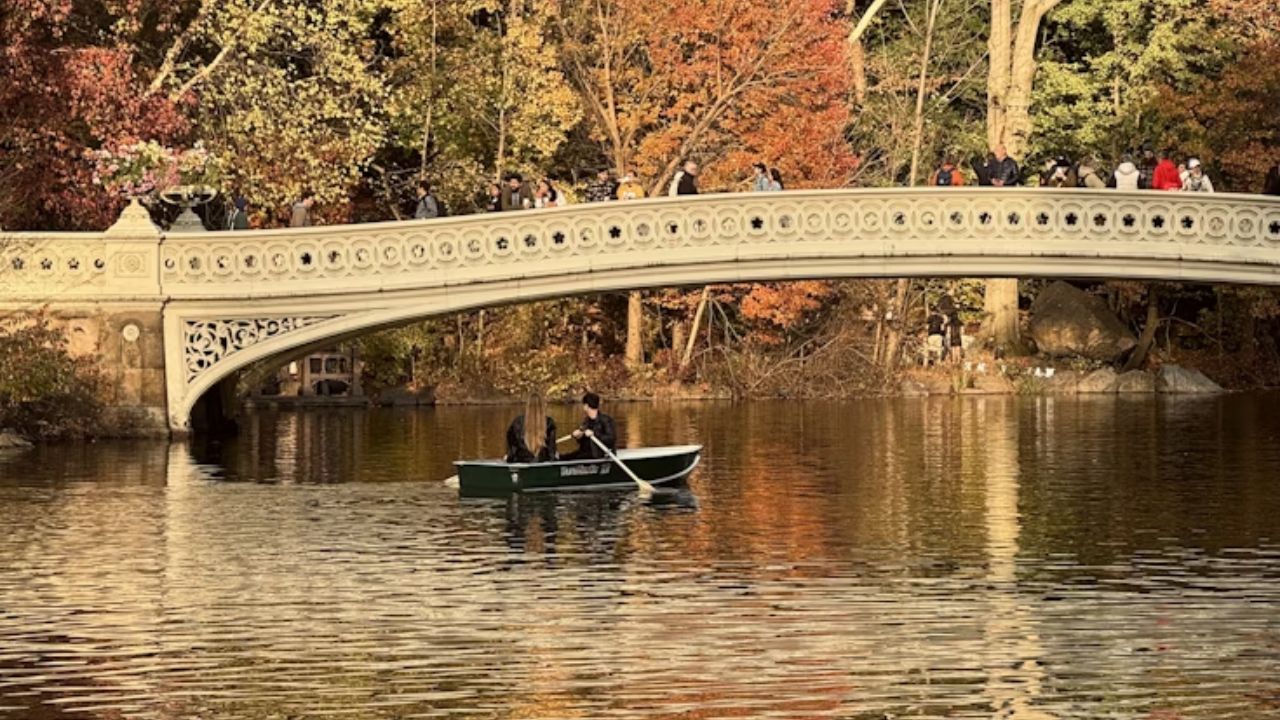
Bow Bridge gets its name from the low, graceful curve that resembles the bow of an archer or violinist. It’s widely considered a masterpiece of Victorian-era design. Built in 1862, it spans the Lake at the park’s center and sits right near Bethesda Terrace.
This Victorian-era bridge is the second-oldest cast-iron bridge in the United States. That’s a real fact worth saying out loud to students. Second oldest. In the entire country.
It’s also been in more films than most actors. Manhattan, Enchanted, Vanilla Sky; Bow Bridge keeps showing up on screen. Students who’ve seen any of those films will do a double-take when they walk onto it. And the views of the Lake from both sides are surprisingly good, especially in the fall.
Why it works for groups: Central location, easy to find, strong photo potential, and zero entry requirements. A perfect 10-minute stop that punches above its weight.
2. Gapstow Bridge
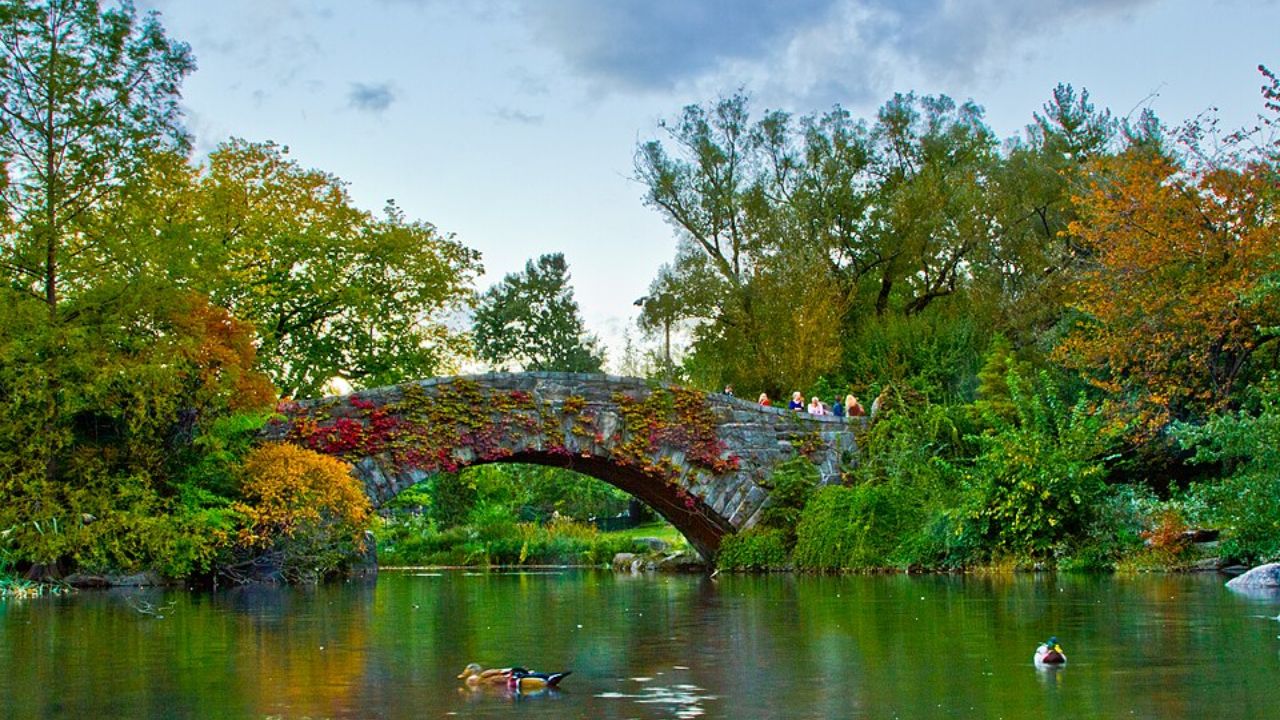
Walk to the southern end of the park. Near the Pond, you’ll find Gapstow Bridge, and it looks nothing like Bow Bridge. That’s the point.
Gapstow Bridge is a stone arch built in 1896, replacing an older wooden version. Its rough, natural look contrasts with the nearby water and city skyline. The skyline framing through the arch is genuinely surprising. You’re in a park, and suddenly you’ve got Midtown looming behind a 19th-century stone bridge. It’s a good visual.
Students who’ve seen Home Alone 2 will recognize it immediately. That moment of recognition goes a long way on a school trip. From Gapstow, you can also spot the Plaza Hotel in the distance. History, film, architecture, all at once.
Why it works for groups: Quick stop from the southern park entrance, easy walk, great skyline shots, and a strong pop culture hook for younger groups.
3. Gothic Bridge
Here’s the thing. Most tours stick to the south end of Central Park. Gothic Bridge sits up near the Reservoir, and a lot of groups never make it there.
Gothic Bridge, located near the Reservoir in the park’s northern end, is a cast iron bridge from 1864 with intricate, church-like railings. It is also known today as “Gothic Bridge” because of its ornate Gothic-inspired design. The way it’s set into the landscape and the fanciful curves of its cast-iron elements make it one of the most photographed features in this part of the park.
That last part matters. The northern section is quieter. Less foot traffic. Students can actually stop and look at the details instead of being pushed along by the crowd. The ironwork here is the kind of thing that makes art students stop mid-sentence.
Why it works for groups: Strong architecture focus, less crowded, great for groups with an interest in design, art, or history.
4. Pine Bank Arch
Most people walk past Pine Bank Arch without realizing it’s there. Which is, honestly, a little insane given how good it looks.
Pine Bank Arch, near the southern playground area, is a cast iron bridge from 1861. Its Gothic-style railings and dark paint give it a historic, moody look, tucked under trees over a walking path. The contrast between the dark ironwork and the surrounding greenery is strong in spring and summer. In the fall, with orange leaves overhead, it looks like a film set.
This one rewards the student who’s paying attention. It’s not loud. It’s not in every travel blog. But it’s been standing since 1861, and it carries that quiet, old-city energy that Central Park does so well.
Why it works for groups: Pairs well with Bow Bridge on the same route, great for photography, and a good example of Gothic Revival design for any art or history module.
5. Oak Bridge
Not every bridge in Central Park is cast iron or stone. Oak Bridge makes that clear.
Oak Bridge, near the park’s castle area, is a rebuilt wooden bridge from 1982, based on an 1860 design. Crossing the Lake’s northern end, it offers views of the wooded Ramble and the water. The Ramble nearby is one of the best birdwatching spots in all of NYC, and that’s not an exaggeration. Over 200 species have been spotted in Central Park. Pair this bridge stop with a quick Ramble walk, and you’ve got a solid environmental studies moment.
The wooden planks, the water below, the trees around it. It feels different from every other bridge on this list. And different is good when you’re managing a group of students who’ve been walking for three hours.
Why it works for groups: Good pairing with Belvedere Castle nearby, strong nature angle, and a welcome change in texture and material from the iron bridges.
Practical Tips for Group Leaders
Planning a student group visit to these bridges takes a bit of logistics. A few things worth knowing:
- Route order matters. Start at Gapstow (south entrance), work up to Bow Bridge and Pine Bank Arch, then head north to Gothic Bridge. Oak Bridge fits naturally near a Belvedere Castle stop.
- Mornings are better. Central Park crowds build fast after 10am. An 8:30 or 9am start means your group gets clean photos and space to move.
- Walk, don’t rush. The walk from Gapstow to Bow Bridge takes about 20 minutes at a normal pace. Built-in stops. Students want photos. Let them take them.
- Weather affects the vibe. Bow Bridge in snow or fog looks nothing like Bow Bridge on a sunny day in May. Both are good. Just know the light changes everything.
- Combine with nearby stops. Bethesda Fountain sits minutes from Bow Bridge. The Central Park Zoo is close to Gapstow. Belvedere Castle pairs with Oak Bridge. These bridges connect to bigger stops, not just each other.
First-time group leaders who want a broader head start can read through how to navigate NYC like a local before the trip, it covers the subway, crowds, and timing in one place.
FAQs: Bridges in Central Park, NY
Q1. How many bridges are in Central Park?
Central Park has 36 bridges in total. Of those, 30 are ornamental bridges and arches. They were built between 1859 and 1866, each designed uniquely by Calvert Vaux in terms of material, style, and landscape placement. The rest are smaller wooden structures crossing streams in the park’s woodland sections.
Q2. Is Bow Bridge the most famous bridge in Central Park?
Yes, by most measures. Bow Bridge is one of the most photographed features in Central Park and one of the most romantic, often serving as the site of wedding proposals. It’s also appeared in more films than any other bridge in the park, which makes it a natural starting point for student tour groups.
Q3. Are the bridges in Central Park accessible for large student groups?
Most of them are. Bow Bridge, Gapstow Bridge, and Gothic Bridge all sit on well-maintained walking paths and handle foot traffic well. Some smaller arches, like Pine Bank Arch, are on narrower paths, so groups may want to spread out a bit. No entry fees apply to any of the bridges.
Q4. What’s the best time of year to visit the bridges in Central Park with a school group?
Spring (April to June) and fall (September to November) are the best windows. The foliage in fall makes every stone and iron bridge look significantly better on camera. Spring brings fewer crowds early in the season and good light. Summer works too, but the park gets very busy mid-day. Winter visits can actually be beautiful, especially after snowfall, but confirm footpath conditions before you plan the route.