New York City doesn’t do anything small. Especially when it comes to attractions that genuinely deliver on history, art, and entertainment all at once, the city has a whole category of places that solo travelers barely scratch the surface of but groups absolutely thrive in.
The tricky part? There are hundreds of things to do in NYC. Narrowing it down for a group, where you’ve got different interests, attention spans, and energy levels all competing, that’s where smart planning earns its keep.
Here are seven top attractions in NYC that hold up beautifully for group visitors, places where the story, the spectacle, and the shared experience actually come together.
Groups looking for a fully planned experience can explore EE Tours’ New York group tour packages, which cover many of these stops with expert guides already built in.
1. The Metropolitan Museum of Art
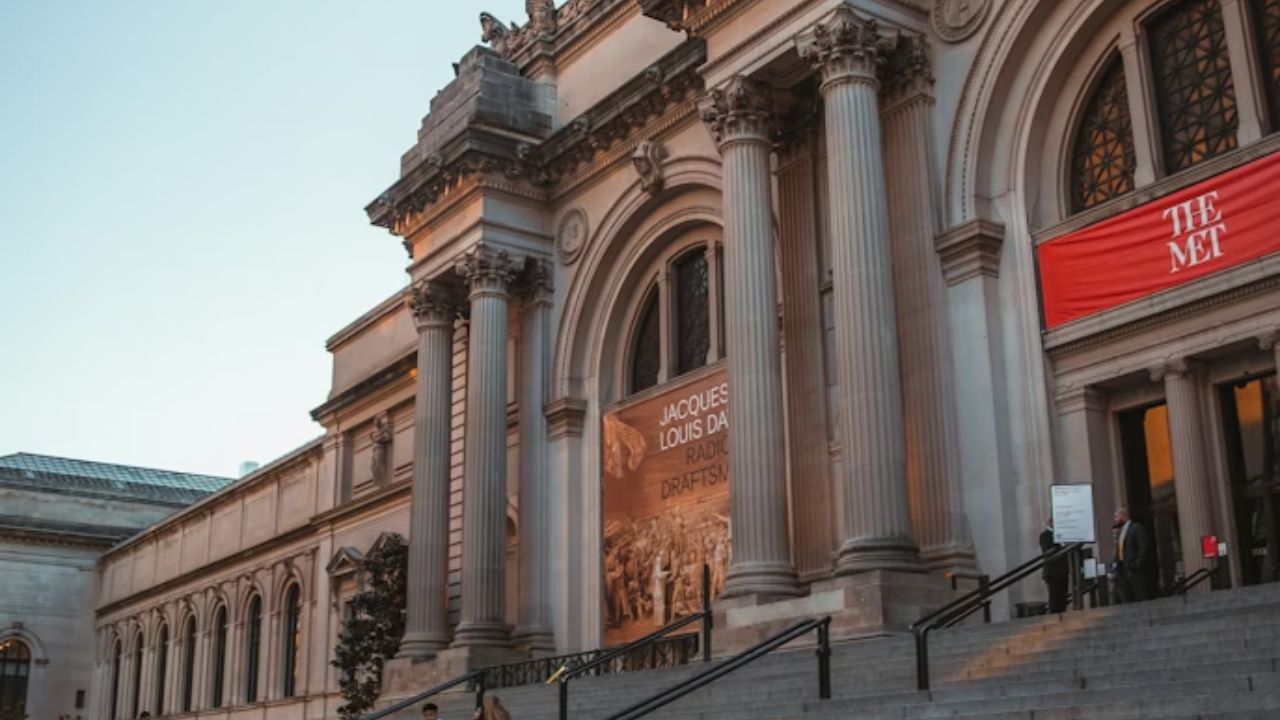
Let’s start here because The Met is, without question, one of the most staggering cultural institutions on the planet. Not just in New York. On the planet.
Behind its iconic neoclassical facade lie 5,000 years of art history, including 2,500 European Old Master, Impressionist, and Post-Impressionist paintings, as well as the greatest collection of Egyptian art and artifacts outside Cairo, including the full-scale Temple of Dendur. That last one stops groups cold every single time. No photo really prepares you for it.
For group visits, The Met works brilliantly because there’s genuinely something for everyone. The history crowd can spend three hours in the Egyptian wing. The art lovers hit the Impressionists. The fashion-forward folks in any group will absolutely want to track down the rotating special exhibitions, including the annual fashion exhibition tied to The Met Gala.
Group visits quick facts:
Detail | Info |
Location | 1000 Fifth Ave, Upper East Side |
Hours | Sun–Tue & Thu: 10am–5pm; Fri–Sat: 10am–9pm |
Admission | Pay-what-you-wish for NY State residents; standard adult tickets for others |
Best for | Mixed-interest groups, school trips, cultural tours |
Plan for at least three to four hours. Seriously, groups that budget two hours always leave wishing they hadn’t.
2. Ellis Island and the Statue of Liberty
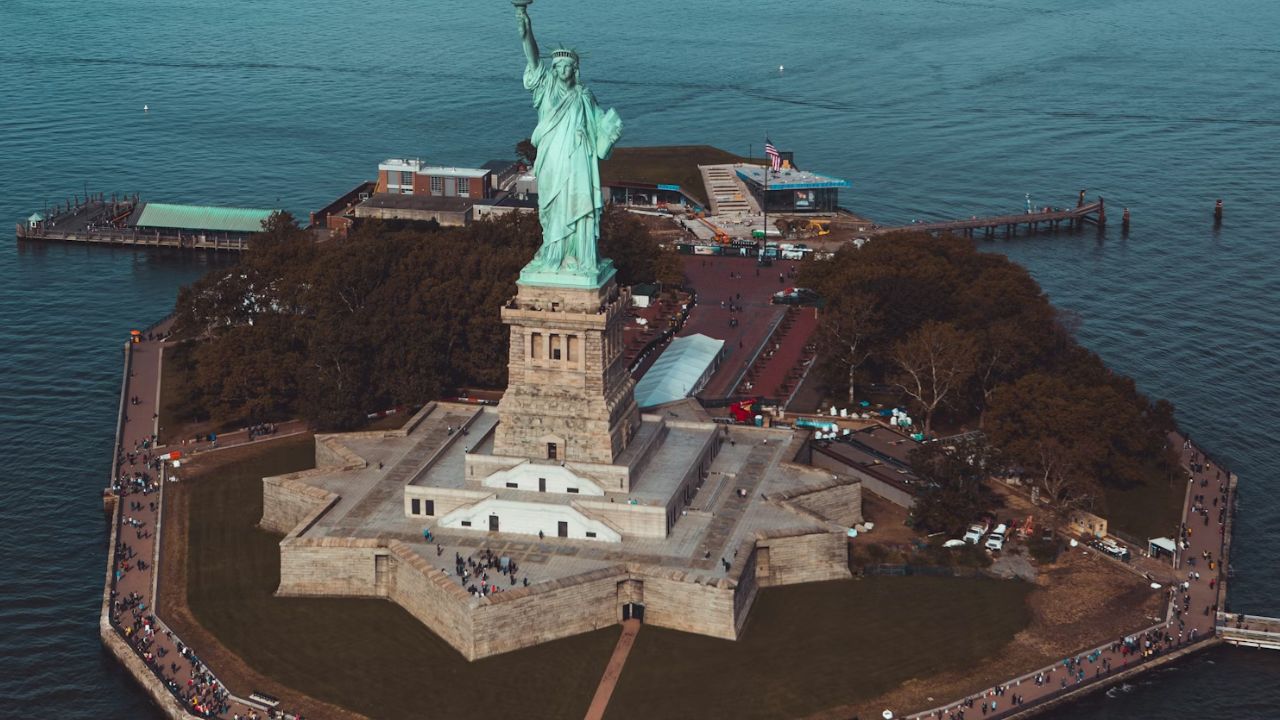
There’s something genuinely moving about visiting these two together, and for groups, this combination hits differently than any other attraction in the city.
Lady Liberty welcomed over 10 million immigrants sailing past to Ellis Island during the turn of the 20th century, standing 305 feet tall from the bottom of her base to the tip of her torch. Just a short ferry ride away, the Ellis Island National Museum of Immigration chronicles America’s immigration history from the 1500s through to today.
Groups with a deeper interest in this era can also look at EE Tours’ dedicated New York History Tour, which pairs Ellis Island and the Statue of Liberty with the Financial District, Federal Hall, and Trinity Church for a full-day historical arc.
Around 12 million immigrants passed through Ellis Island in search of a better life. For many groups, especially those with family roots in early 20th-century immigration waves, the Family History Center on Ellis Island becomes genuinely personal. People find ancestors’ names. That’s a moment no one forgets.
Budget at least three hours for the entire round-trip experience if you’re visiting both islands. Ferry tickets need to be purchased in advance, particularly for groups, and Statue City Cruises is the only vendor authorized to provide tickets and transportation to Liberty and Ellis Islands.
For adventurous groups, there’s also the Hard Hat Tour of Ellis Island’s abandoned hospital complex, a 90-minute guided tour through the unrestored south side of the island that most visitors never see. A completely different experience from the main museum.
3. Broadway
Look, Broadway deserves a spot on this list and not just because it’s famous. It’s because watching a world-class live production with a group is genuinely one of those shared experiences that people talk about for years.
New York produces, casts, and consumes the legitimate plays and musical extravaganzas that Americans desire, and its Off-Broadway and Off-Off-Broadway venues are where experimental theater trains playwrights, actors, dancers, and directors. So there’s truly a production for every kind of group.
For group bookings specifically:
- Most Broadway shows offer group discounts for 10+ tickets
- Weekday matinees are easier to manage logistically and often better priced
- Rush tickets and lottery options exist for budget-conscious groups
- Theater districts cluster around 42nd to 54th Street, making pre-show dinners easy to coordinate
Theater groups especially should check out EE Tours’ New York Theater Tour, which handles Broadway show coordination, group ticketing, and all the surrounding logistics so the group leader doesn’t have to.
The entertainment factor here is obvious. But Broadway also carries a serious cultural history. The Theater District has been continuously operating since the early 1900s, and shows like Hamilton literally reimagined how Americans engage with their own history through musical storytelling. That’s a pretty remarkable thing to experience together as a group.
4. The 9/11 Memorial and Museum

This one requires a different kind of preparation for groups. It’s not light. But it is essential, and for many visitors, it becomes the single most meaningful stop on any NYC trip.
The 9/11 Memorial and Museum at the World Trade Center stands as a permanent tribute to those who lost their lives on September 11, 2001, and February 26, 1993, with two large memorial pools and exhibitions and artifacts that tell the story of the day.
The reflecting pools, built on the footprints of the original Twin Towers, are arresting in a way that’s hard to describe. Groups often fall quiet when they arrive. That says everything.
What makes this work especially well for groups:
- Audio guides available in multiple languages
- Guided group tours can be arranged in advance.
- The museum is exhaustively detailed for history-focused groups.
- The memorial plaza itself is free and publicly accessible.
One important note: this is a site of grief as much as history. Group leaders should set expectations appropriately beforehand, especially for younger visitors. But for groups that want to understand modern American history at its rawest, there’s nowhere else like this.
5. The American Museum of Natural History
Here’s one that surprises people. Natural history museums aren’t always the first thing adults think of when planning a group cultural outing, but AMNH has a way of making everyone feel like a kid again, which is not a small thing when you’re trying to keep a diverse group engaged.
The scale and attention to detail are extraordinary, and the dinosaur section alone, with its massive fossil skeletons, is a showstopper even for people who aren’t particularly interested in science.
But the history and cultural dimensions run deep here, too. The Hall of Ocean Life. The Hall of Planet Earth. The extensive anthropological collections span cultures across every continent. The American Museum of Natural History is one of New York’s most venerable institutions, alongside Lincoln Center and the Juilliard School.
For groups, AMNH is particularly practical:
- Multiple floors mean natural crowd dispersal (no bottlenecking)
- The Rose Center for Earth and Space has a planetarium perfect for a group-scheduled event.
- Cafeteria-style dining on-site handles group lunch logistics cleanly
- Evening events and private group programming available
6. The High Line
Not every attraction needs to be indoors. The High Line is honestly one of the most creative urban reinventions anywhere in the world.
Once a railway line in use until 1980, the 1.45-mile strip was transformed in 2009 into what is now considered one of the most unique parks in NYC, featuring wildflowers, greenery, and outdoor art installations alongside killer views of the skyline, running from Hudson Yards to the northern edge of Chelsea.
For groups, this works as a connecting thread between other experiences. Start at Hudson Yards, walk the High Line, and end up in Chelsea’s gallery district. That’s a half-day itinerary with history, public art, architecture, and neighborhood culture all folded into a single route.
The art installations change regularly and often respond to the city’s cultural moment. The views of the Hudson River and the Manhattan skyline from the elevated walkway are genuinely spectacular, and it’s all free. Free is beautiful when you’re coordinating group budgets.
7. Lincoln Center for the Performing Arts
If Broadway is NYC’s blockbuster entertainment, Lincoln Center is its conservatory. And for groups interested in the performing arts at the highest level, this is simply the destination.
Lincoln Center is home to the Metropolitan Opera Association, the New York Philharmonic in Avery Fisher Hall, and the New York State Theater, which hosts the New York City Ballet, considered the highest-reputed troupe in the country.
The finest concerts in this very musical city are heard in Carnegie Hall, whose construction was funded by Andrew Carnegie’s two-million-dollar donation. But Lincoln Center offers something slightly different: a complex of performance spaces that groups can explore architecturally even between shows, plus public plaza events and free programming that don’t require tickets.
For performing arts groups, music schools, or any crowd with a serious appreciation for dance, opera, or classical music, Lincoln Center is essentially a pilgrimage. Plan around specific performances rather than just dropping in, and book well ahead for popular shows.
FAQs
What are the top attractions in NYC for group visitors?
Popular choices include museums, Broadway shows, Central Park, and historical landmarks like the Statue of Liberty.
How many attractions should a group visit in a day?
Two to three major attractions usually work best to avoid fatigue.
Are these attractions suitable for all age groups?
Most are adaptable, though some may suit older groups better.
What is the best way to organize group visits in NYC?
Plan by location, balance activities, and allow time for breaks.
Practical Tips for Group Visitors to NYC
Getting the logistics right makes everything else possible. A few things worth knowing:
- Book everything in advance. NYC’s top attractions sell out, particularly during spring and fall peak seasons
- Morning visits are almost always better. Crowds at The Met, AMNH, and the 9/11 Museum build fast after 11am.
- Ferry tickets for Ellis Island need early booking. Groups of 10+ should look at dedicated group ferry scheduling through Statue City Cruises.
- Consider a guided group tour. For a city this dense with history and context, having an expert narrator transforms what would be a good visit into a great one
- Build in transition time. NYC blocks are long, and groups move more slowly than individuals. The schedule that looks tight on paper will feel even tighter on the ground.
New York City rewards groups that come prepared. These seven attractions aren’t just individually impressive; they connect into a coherent story about a city that has been building, breaking, reinventing, and creating itself for centuries. The history is layered everywhere. Art is unavoidable. And the entertainment? That’s just New York being New York.
Groups ready to start planning can request a custom quote and get a tailored itinerary built around exactly what the group wants to see and do.