Most visitors to New York City never make it here. And honestly? That’s their loss.
Roosevelt Island sits right in the middle of the East River, between Manhattan and Queens, and it’s one of those places that feels like a completely different city once you step off the tram. Two miles long. 800 feet wide at its broadest point. And packed with more history, weird architecture, and genuinely good views than most people expect from a sliver of land most tourists don’t even know exists.
Here’s the thing, though. This island wasn’t always a place people chose to visit. For most of its history, coming here meant you were a criminal, a smallpox patient, or someone the city wanted to keep out of sight. Prisons, asylums, hospitals. All of it.
The island was basically New York’s way of dealing with people it didn’t want to think about. Which makes wandering around it today, past ruins and cherry trees and cutting-edge tech campuses, feel genuinely strange in the best possible way.
For travelers planning a New York City trip, especially through an educational or arts-focused tour, Roosevelt Island is the kind of half-day or full-day stop that stays with you long after Times Square fades from memory.
Quick Reference Before You Go
Feature | Details |
Location | East River, Manhattan/Queens border |
Island Size | ~2 miles long, 800 ft wide |
Best Time to Visit | April/May (cherry blossoms) or fall |
How to Get There | Roosevelt Island Tramway or F train |
Entry Cost | Almost everything is free |
Getting Around | Walkable end-to-end, free Red Bus available |
1. Ride the Roosevelt Island Tramway First
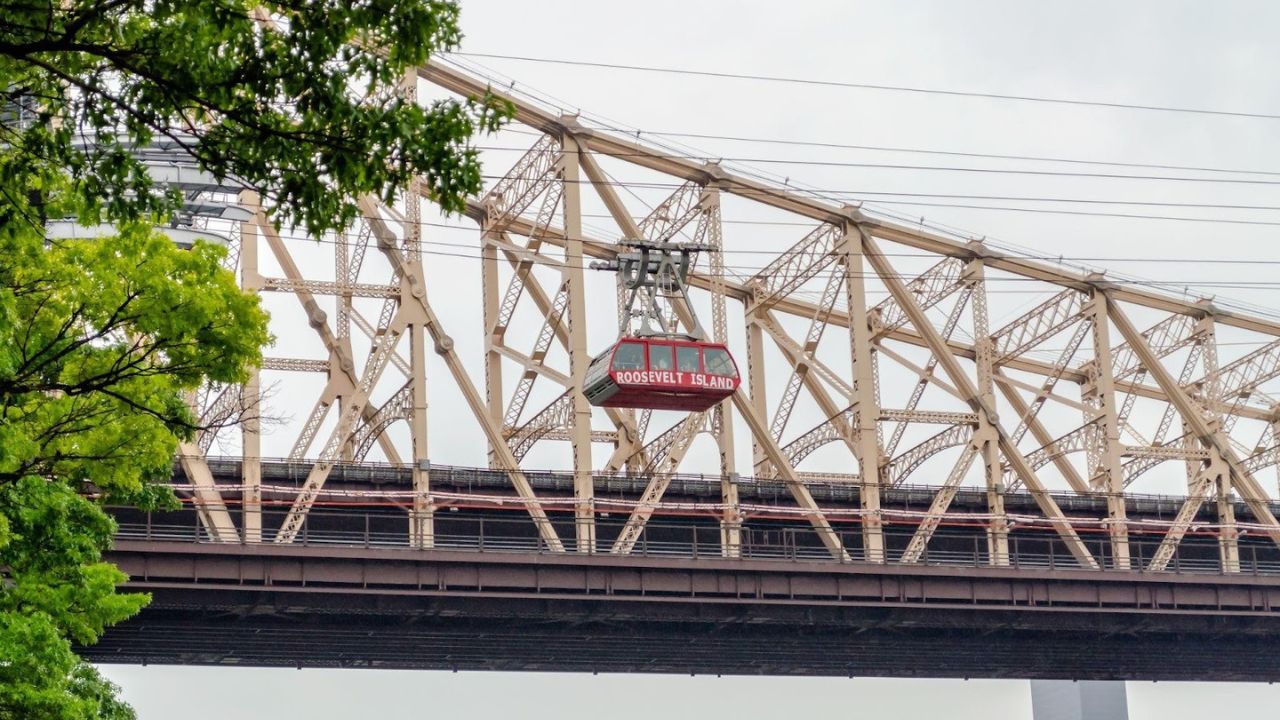
The Roosevelt Island tram is North America’s first commuter aerial tramway, built in the 1970s before the subway even reached the island, and it’s one of those rides that shouldn’t be as exciting as it is. But it absolutely is.
The red cable car grips fast-moving steel cables on a 230-foot ascent, then floats with surprising smoothness between high rises and the tower of the Ed Koch Queensboro Bridge before the East River opens up below, and the skyline becomes a full panorama.
Four minutes. That’s all it takes. The tram costs $2.90 each way, the same as a standard subway fare, and runs every 7 to 15 minutes.
Stand at the front on the way over. Grab a back-left position on the return trip for unobstructed Manhattan skyline shots. And maybe don’t think too hard about that Spider-Man scene.
The tram departs from East 60th Street and Second Avenue, which puts it right at the edge of the Upper East Side. If the group has time before or after the island visit, that neighborhood has its own impressive list of stops worth knowing about. Here’s a full guide to things to do in the Upper East Side.
2. Franklin D. Roosevelt Four Freedoms State Park
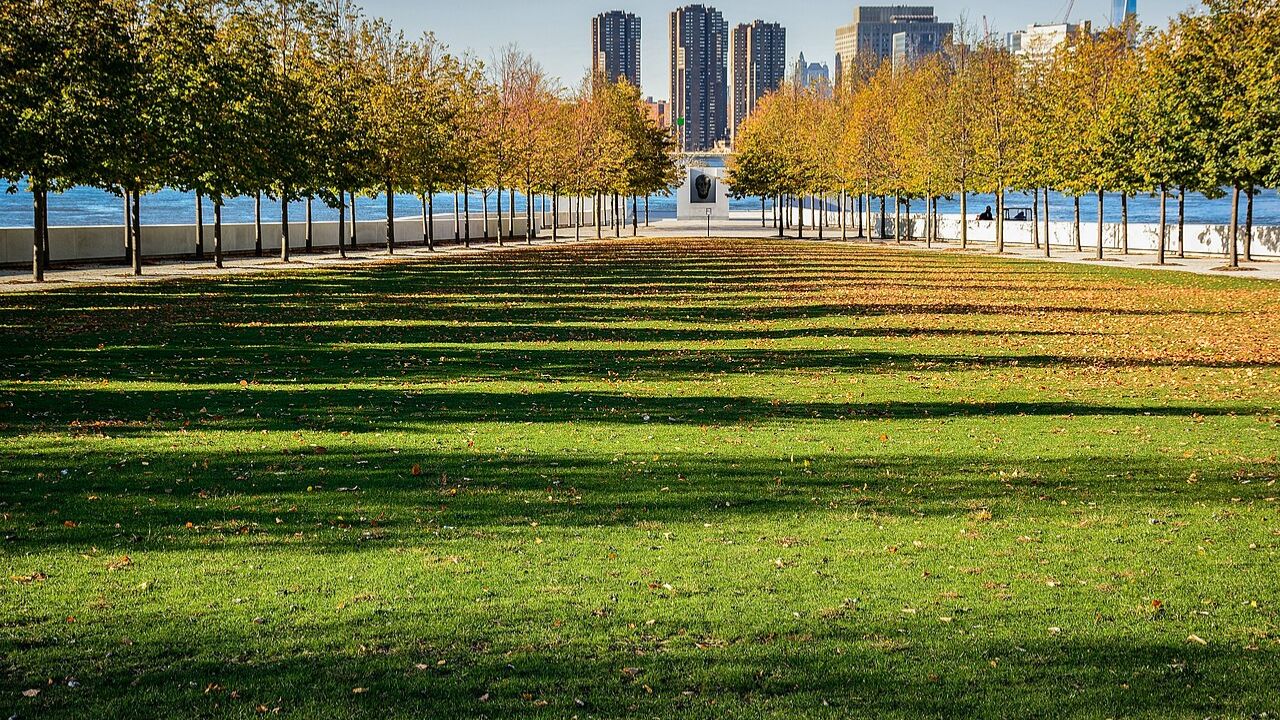
Walk south from the tram station. Keep walking. The island narrows into a fine triangular point, and that’s exactly where this park sits, and it’s worth every step of the walk to get there.
The park serves as a memorial for Franklin D. Roosevelt, its name drawn from the four freedoms he outlined in a famous speech: freedom of speech and expression, freedom of worship, freedom from want, and freedom from fear. Inside the park sits a six-foot-tall bronze casting of FDR, 120 Little Leaf Linden trees, a 60-square-foot open granite plaza, and a 340-foot-long triangular lawn.
Designed by legendary architect Louis Kahn in the 1970s but not completed until 2012, nearly four decades after his death, which is insane if you stop and think about it. The park also hosts events ranging from kite flying to readings to yoga sessions, with genuinely stunning views of Midtown Manhattan sitting right across the water.
It’s contemplative. Quiet. One of those rare spots in New York City where the noise of the city just… stops.
3. The Smallpox Hospital Ruins
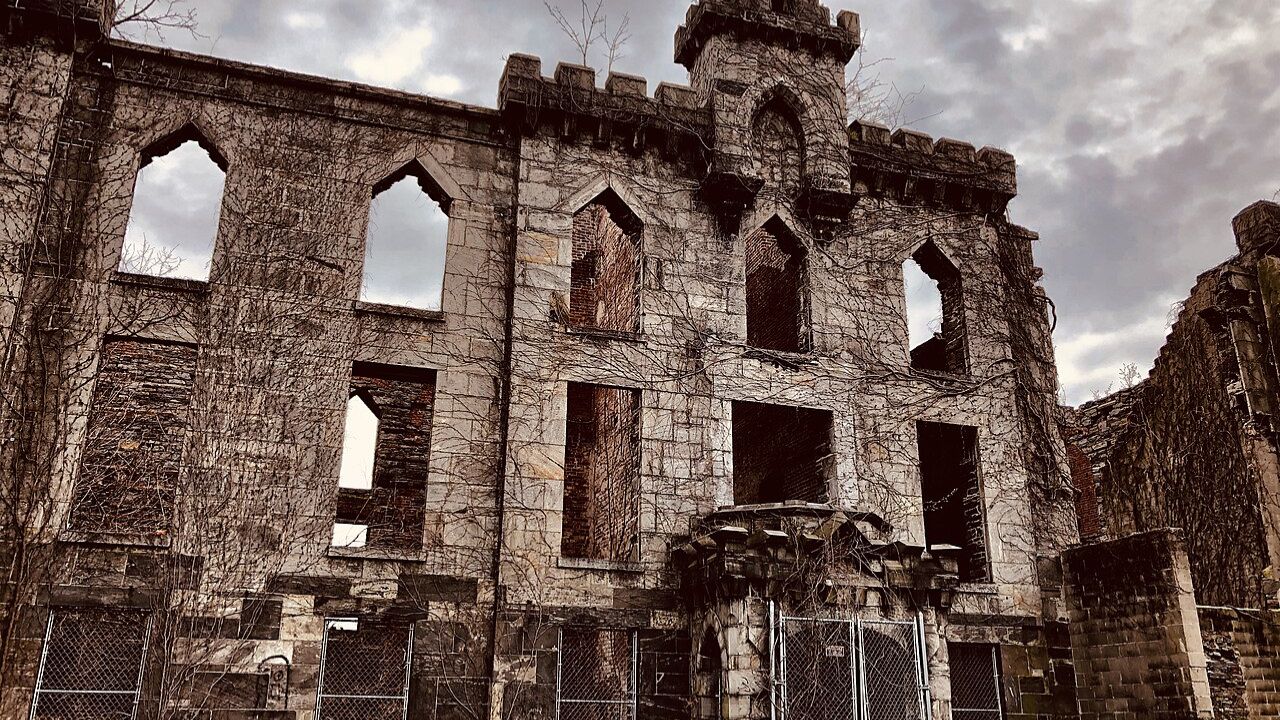
Walking back north from Four Freedoms Park along the west side of the island, there’s a moment where the mood shifts completely.
The ruins of the Smallpox Hospital are now covered in ivy and hollowed out by the elements, a fenced-off, eerie, decaying structure that once housed patients who suffered greatly. Designed by James Renwick Jr., the same architect behind St. Patrick’s Cathedral in Manhattan, which feels like an odd detail, it’s a New York City landmark and somehow one of the most atmospheric spots on the entire island.
And here’s a detail most visitors don’t know going in: the ruin is also a cat sanctuary, and visitors regularly get to interact with the resident cats as they pass by.
Gothic ruins. Ivy. Stray cats. Honestly, very on-brand for New York.
4. Southpoint Park
This one doesn’t always make the list. But it should.
Located between Cornell Tech and FDR Four Freedoms State Park, Southpoint Park offers sweeping views of both Manhattan and Queens and is a genuinely great spot for picnics. Bring food. Sit on the grass. Watch the East River traffic for a while.
There’s also the FDR Hope Memorial here, a sculpture of Roosevelt in a wheelchair greeting a girl on crutches, positioned on the west side of the park, that doesn’t get nearly enough attention from visitors rushing south toward the main park.
Slow down a little at Southpoint. It’s worth it.
5. The Cherry Tree Promenade
Timing matters here. A lot.
A row of cherry trees runs along the waterside pathway leading from the tram to the island’s southern tip. Come April, they put on quite the show, with pink blossoms against the Manhattan skyline in a shot that’s genuinely hard to beat.
But even outside bloom season, this walk along the island’s west side is one of the better urban strolls in New York City, full stop. The skyline sits close enough to feel dramatic and far enough away to feel calm. The UN complex is clearly visible across the water. And the whole thing has a quality that’s hard to describe, peaceful but unmistakably New York at the same time.
6. Blackwell House
Built in 1796, Blackwell House is one of the oldest houses in New York City. It was added to the National Register of Historic Places in 1972 and has since been opened to the public, with exhibits telling the story of Roosevelt Island and the buildings that no longer exist. Entry is free.
The house is currently undergoing renovation to become a community center and will be NYC’s sixth-oldest farmhouse. The fact that an 18th-century clapboard farmhouse exists within a few miles of Midtown Manhattan says something genuinely interesting about the layers of this city. History buffs won’t want to skip it.
The island as a whole tells a genuinely layered story of New York, the kind of history that doesn’t show up in textbooks but sticks with you. For groups who want to go deeper into the city’s historical fabric beyond Roosevelt Island, e.e. Tours’ New York History Tour covers the Financial District, Ellis Island, the Statue of Liberty, and more.
7. Chapel of the Good Shepherd
Easy to walk past. Don’t.
Built in 1889 by architect Frederick Clarke Withers, known for Gothic Revival churches, the Chapel of the Good Shepherd was originally built to serve residents of the island’s various almshouses. It was designated a NYC landmark in 1976 and restored in 2003. Today, it primarily serves as a community center.
Small, beautifully preserved, and sitting quietly between the island’s bigger attractions. It rewards visitors who actually pause rather than just photograph it from outside.
8. Blackwell Island Lighthouse and Lighthouse Park
Walk all the way to the northern tip of the island, about 20 minutes from the tram station, and you’ll find one of Roosevelt Island’s most photogenic spots.
In 1872, inmates of the island’s penitentiary built the 50-foot-tall Lighthouse using the island’s own stone. Designed by James Renwick Jr. in his signature Gothic Revival style, it originally helped sailors navigate the treacherous East River currents. Today, it anchors Lighthouse Park, which is popular with locals for fishing, BBQs, and just sitting on the grass watching the river.
Build the walk into the itinerary. The northern end of the island is quieter than the southern tip and has a different kind of energy, more neighborhood, fewer landmarks.
9. Cornell Tech Campus
Cornell Tech is a joint venture between Cornell University and Technion, Israel’s Institute of Technology, and was one of Mayor Michael Bloomberg’s economic development initiatives. The campus opened in 2017 and is a striking piece of contemporary urban planning, sitting right next to a collection of Gothic ruins and 18th-century farmhouses, which is a very New York kind of contrast.
The campus includes the Emma and Georgina Bloomberg Center, the Tata Innovation Center, and the Verizon Executive Education Center. Visitors can walk freely through the grounds. The architecture is genuinely worth seeing, especially with the rest of the island’s historic texture as a backdrop.
10. RIVAA Gallery
For anyone on the trip who cares about contemporary art, and on an educational arts tour that’s presumably most people, this one belongs on the list.
The Roosevelt Island Visual Arts Association (RIVAA) exhibits work by around 35 artist members alongside international guest artists, covering photography, painting, and live music. It’s a real local arts space. Not a gift shop with a gallery attached. Programming changes regularly, so checking ahead before the visit is worth doing.
For art-focused groups who want more than one gallery stop on their New York itinerary, e.e. Tours’ New York Art Tour covers architecture walks, artist communities, museum visits, and gallery owner conversations across the city.
11. The Free Red Bus
This one surprises basically every first-time visitor. Roosevelt Island has its own free internal bus service that runs the full length of the island. The free Red Bus makes it easy to cover the island without walking the entire length, which is useful on hot days or when the group includes older travelers or families with young kids.
But honestly? Even for people who could walk the whole thing, and they should walk at least part of it, the Red Bus is a fun, distinctly local experience. It feels less like a tourist attraction and more like just being on the island for a bit. Which is the whole point of coming here?
How to Get There
Method | Departure Point | Cost | Approx. Time |
Roosevelt Island Tramway | E 60th St & 2nd Ave, Manhattan | $2.90 (MetroCard) | ~4 min |
F Train | Various Manhattan stops | $2.90 | Varies |
NYC Ferry | East River stops | $4 | Varies |
Car or Bike via Bridge | Queen’s side only | Free | Varies |
Best Time to Visit
- April to May — Cherry blossom season. The west-side promenade walk during bloom is genuinely one of the better photo opportunities in all of New York City, and it’s completely free.
- Summer — Southpoint Park picnics, evening waterfront walks, and the river breeze make the heat bearable in a way that the concrete canyons of Midtown simply don’t.
- Fall — Foliage, crisp air, and a different quality of light on the ruins. Photogenic in a completely different way than spring.
- Winter — Quieter, more atmospheric. The Smallpox Hospital ruins especially take on a genuinely different character when the ivy is bare, and the tourists are gone.
Why Roosevelt Island Belongs on Any New York Itinerary
Look, Roosevelt Island doesn’t compete with the Statue of Liberty or the Empire State Building. It’s not trying to. What it offers is something most New York visitors never actually find: real quiet, a genuinely unusual slice of the city’s history, and views of Manhattan that most Midtown tourists never see because they’re already inside the skyline looking out.
For groups on an educational or arts-focused tour, the island covers an unusual breadth in a compact space. History. Gothic architecture. Contemporary art. Urban planning. Nature. All of it within walking distance, all of it largely free, and all of it within a quick tram ride from the middle of one of the world’s busiest cities.
That’s a rare combination. And it’s worth the detour.
FAQs
What are the best things to do in Roosevelt Island for first-time visitors?
Top activities include riding the tramway, visiting Four Freedoms Park, exploring the Smallpox Hospital ruins, and walking along the promenade.
How do visitors get to Roosevelt Island?
Visitors can reach the island via the Roosevelt Island Tramway, the subway, or the NYC Ferry.
How much time is needed to explore Roosevelt Island?
Most visitors can explore the island in two to four hours, depending on how many attractions they visit.
Is Roosevelt Island worth visiting?
Yes. It offers unique views, historic landmarks, and a quieter atmosphere compared to Manhattan.