You know that feeling when you discover a hidden gem that somehow escaped the typical tourist radar?
That’s Roosevelt Island.
Tucked in the East River between Manhattan and Queens, this two-mile sliver of land offers something genuinely different from the usual New York City experience.
Most visitors rush past it without a second thought, but those who take the time to explore will find blend of history, architecture, and unexpected tranquility just minutes from Midtown.
The island’s story reads like a novel with chapters spanning indigenous settlements, colonial farms, hospitals, prisons, and eventually a planned residential community.
Every corner holds a piece of New York’s past that most guidebooks overlook. For tour operators and guides, this creates an opportunity to showcase something authentic rather than recycling the same tired Manhattan narratives everyone already knows.
The Aerial Tramway Experience
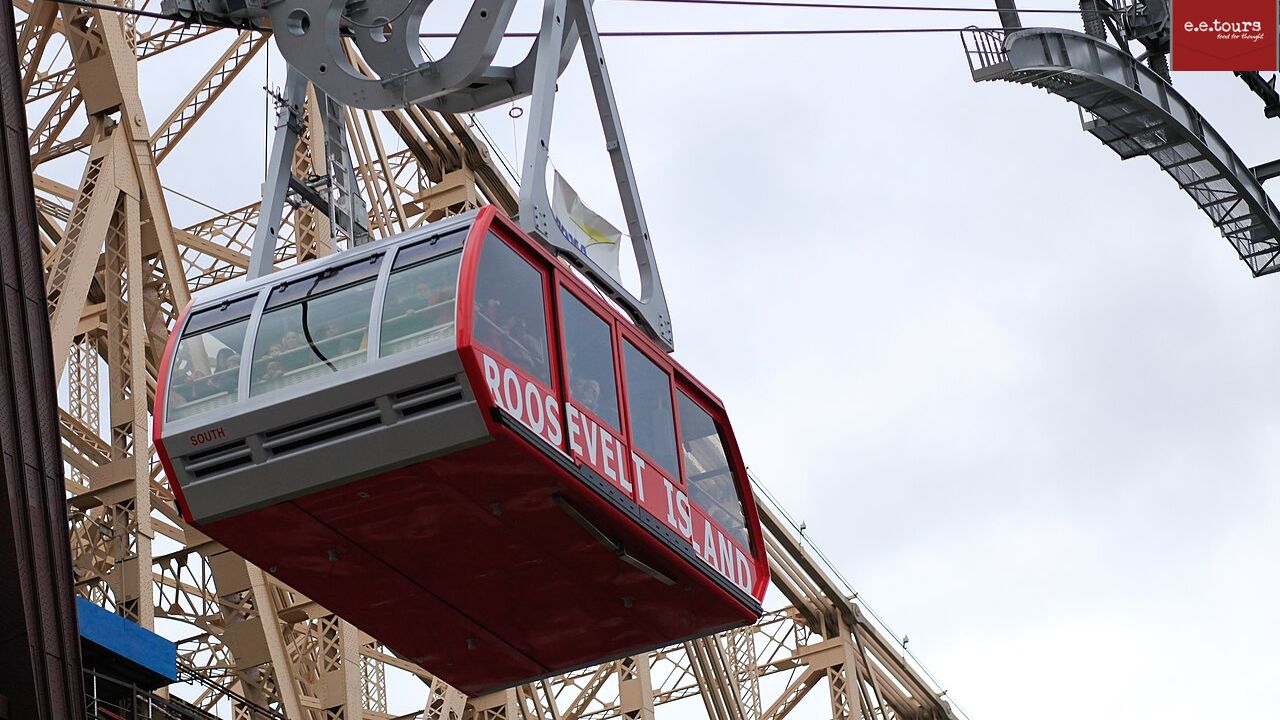
Image Credit Wikipedia
Starting your tour with the Roosevelt Island Tramway sets the tone perfectly. This isn’t just transportation; it’s an experience that visitors remember long after they’ve returned home.
The tram glides 250 feet above the East River, offering unobstructed views of the Manhattan skyline, the Queensboro Bridge, and the United Nations building.
The three-minute journey functions as both an introduction and a transition, separating visitors from the mainland chaos and preparing them for something different.
Originally built in 1976 as a temporary fix during subway construction, the tramway quickly won over the city, and never left. Today, it’s a highlight of the tour. As the cabin glides upward, you’ll see why locals insist it stay: sweeping skyline views, the thrill of the ascent, and a unique perspective on the city’s evolution.
Tour guides should point out the engineering feat this represents and how the system has been upgraded multiple times while maintaining its original character.
Franklin D. Roosevelt Four Freedoms Park
The southern tip of the island hosts one of New York’s most contemplative spaces. Designed by architect Louis Kahn, the Four Freedoms Park wasn’t completed until 2012, nearly four decades after his death.
The brutalist memorial honors FDR’s famous 1941 speech about freedom of speech, freedom of worship, freedom from want, and freedom from fear.
Walking through this space feels peaceful. The granite steps, copper beech trees, and open lawn create a progression that builds toward the monument itself.
At the southern point, visitors stand at a bronze bust of Roosevelt with the Manhattan skyline framing the view. The intentional design creates moments of reflection that contrast sharply with the city’s usual frenetic energy.
Tour groups benefit from understanding Kahn’s architectural philosophy here. He wanted visitors to experience the space rather than simply look at it.
The way sunlight plays across the granite, how the trees frame specific sightlines, and even the sound of water against the seawall all contribute to the memorial’s impact.
The Octagon and Island History
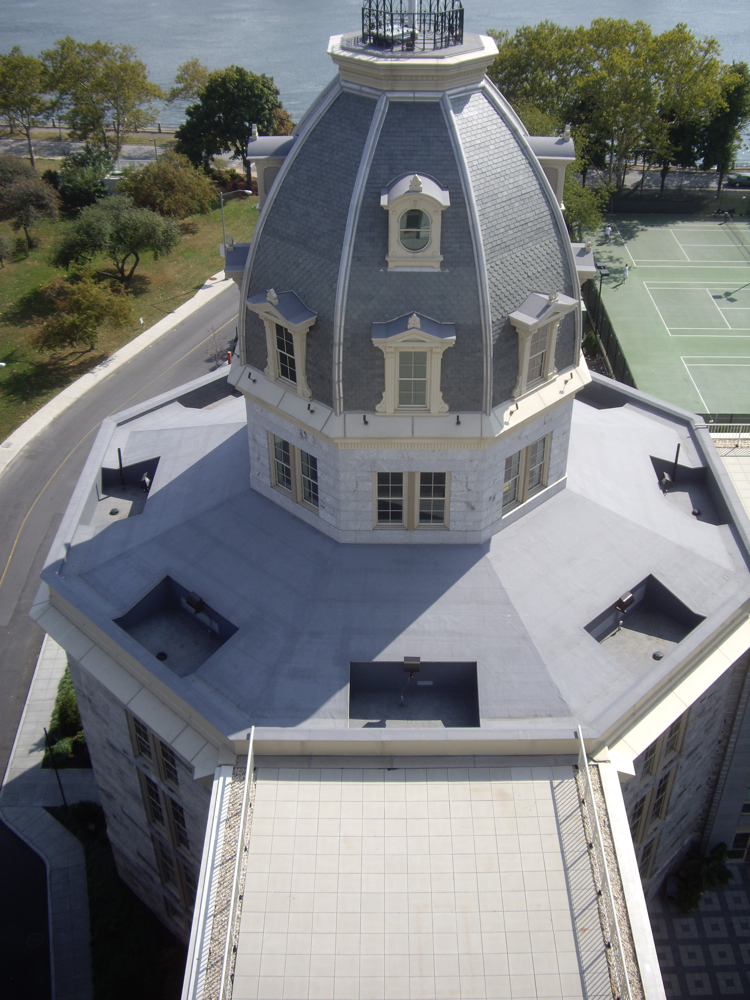
Image Credit Wikipedia
The Octagon building represents Roosevelt Island’s remarkable transformation. Originally built in 1841 as the main entrance to the New York City Lunatic Asylum, this domed structure now anchors a luxury apartment complex.
Only the original rotunda and staircase remain from the 19th century, but they’re enough to convey the building’s institutional past.
This location offers tour guides a chance to discuss the island’s role in New York’s public health and institutional history. Before it became residential, Roosevelt Island housed hospitals, asylums, prisons, and quarantine facilities.
The city essentially used the island to isolate populations it didn’t want in Manhattan proper. Patients at the asylum included everyone from immigrants struggling with trauma to women whose families found them inconvenient.
The Octagon’s preservation demonstrates how historical architecture can be integrated into modern development.
Visitors can see the contrast between the restored 19th-century elements and contemporary residential construction. This juxtaposition tells a story about how New York manages its past while continuing to evolve.
Bring your students to touch real history! Our Educational / The Arts tours include the Octagon, Blackwell House, and tram rides with NY State curriculum tie-ins.
Blackwell House
This unassuming farmhouse is actually the oldest building on the island, constructed between 1796 and 1804. The Blackwell family farmed here for decades before New York City purchased the island in 1828. The house served various institutional purposes over the years, including housing for wardens and hospital staff.
What makes Blackwell House valuable for tours isn’t its architecture, which is modest compared to Manhattan’s grand buildings.
Instead, it connects visitors to the island’s pre-institutional history. This was once a rural farming community, difficult as that is to imagine now. The house survived everything that came after; the hospitals, prisons, and urban renewal projects; making it a tangible link to a completely different era.
Restoration work has been ongoing, and the house occasionally opens for special events. Even when closed, the exterior provides context for discussing how Roosevelt Island evolved from agricultural land to institutional complex to residential community.
Lighthouse Park and the Lighthouse
At the island’s northern tip, Lighthouse Park offers green space and waterfront access. The Roosevelt Island Lighthouse, built in 1872, still stands as a maritime landmark despite no longer serving its original navigational purpose.
The 50-foot Gothic Revival structure was built by island prison inmates using local gray gneiss.
The lighthouse area provides sweeping views of the Hell Gate section of the East River, where the currents create notoriously difficult navigation conditions.
Tour groups can observe the convergence of the East River, Harlem River, and Long Island Sound while learning about the area’s maritime history.
The park itself features walking paths, seating areas, and meadows. It represents the kind of public space that makes Roosevelt Island appealing to residents and visitors alike. Unlike Manhattan’s crowded parks, this area often feels pleasantly uncrowded even on beautiful days.
Adults love the quiet drama, and for that, you can book our Adult Tours for sunset at the lighthouse, tram cocktails, and skyline photo stops.
Main Street and Modern Development
Walking along Main Street demonstrates how Roosevelt Island functions as a contemporary residential community. The pedestrian-oriented street features shops, restaurants, and services that support daily life. No cars are allowed on Main Street, creating an unusual car-free zone just minutes from Manhattan.
The modern development here represents intentional urban planning from the 1970s, when the island was redesigned as a mixed-income residential community.
The things to do in Roosevelt Island today reflect this dual character; historical exploration combined with experiencing a unique urban environment. Tour groups can observe how New York incorporated historical preservation into a forward-thinking development plan.
The Island’s Walking Paths
Roosevelt Island’s perimeter features walking and cycling paths that circumnavigate the entire landmass. These paths offer constantly changing perspectives on the Manhattan and Queens shorelines. Different sections provide distinct experiences, from the manicured southern promenades to the wilder northern reaches.
For guided tours, these paths connect all the major sites while providing transition time for narration and discussion. The relatively flat terrain makes the island accessible for most fitness levels. Groups can pause at various viewpoints to photograph the skyline or simply absorb the unusual feeling of being so close to Manhattan yet feeling so removed from its intensity.
Explore Roosevelt Island with EE Tours
Ready to see Roosevelt Island from a new perspective? EE Tours offers guided experiences that uncover the island’s history, culture, and stunning views in one seamless journey. From peaceful parks to architectural landmarks, every stop is thoughtfully planned to make your visit easy and memorable.
Let our expert guides handle the details while you focus on discovering the most fascinating sights. Book your Roosevelt Island group tour today and enjoy New York like never before!