Washington DC hits differently when you’re there in a group. The monuments are taller. The history feels heavier. Somewhere between the Lincoln Memorial and the National Archives, students go from reading about America to actually standing inside it.
That shift is the whole point.
For teachers and group leaders planning an educational tour, DC is hard to beat. Every street has a lesson attached. Every building connects to something students have already learned in class. But the city is also huge, and with only a few days on the ground, choices matter. So here’s a focused, honest breakdown of what to see in Washington DC on a student group tour, starting with the non-negotiables.
The National Mall
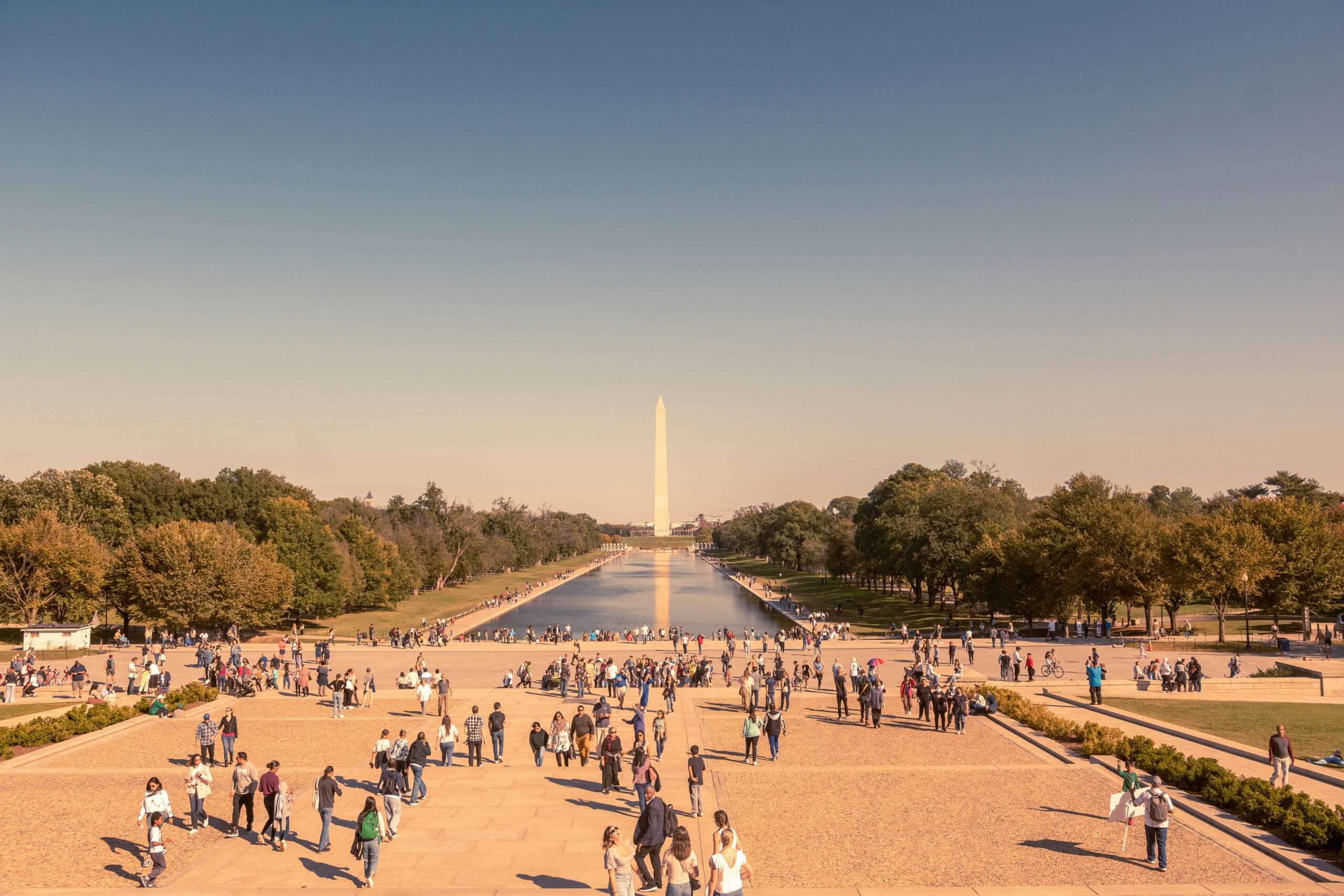
The National Mall is the backbone of any DC trip. It runs about two miles between the Lincoln Memorial and the U.S. Capitol. And walking that stretch with a student group is something most of them remember for years.
The Lincoln Memorial alone can take a full 45 minutes. Not just a photo stop. Actually sit on the steps, look east toward the Reflecting Pool, and talk about why Lincoln’s memorial faces the city the way it does. That kind of context turns a landmark into a lesson.
Other stops along the Mall worth making:
- Washington Monument — At 555 feet, it was the tallest structure in the world when it was built. Still striking.
- World War II Memorial — Fifty-six granite pillars, one for each U.S. state and territory. Quiet and powerful.
- Korean War Veterans Memorial — The 19 stainless steel soldier figures stop students cold. Every time.
- Vietnam Veterans Memorial — The Wall lists 58,195 names. A popular assignment on DC educational tours is pencil-rubbing the name of a fallen soldier. It’s hands-on, quiet, and hits hard.
The Mall is free. All of it. That’s the other thing groups love.
Smithsonian Museums
Here’s the thing about the Smithsonian. There are 17 museums on or near the National Mall. A group can’t hit all of them. Trying to rush through five in one day is exhausting and frankly, a waste.
We suggest picking two. Do them properly.
National Air and Space Museum
This holds the largest collection of historic aircraft and spacecraft in the world. The Wright Brothers’ Flyer is here. So is the Apollo 11 command module. For science and STEM-focused groups, this is the obvious first pick. The IMAX theater inside is also a genuinely good 45 minutes.
National Museum of American History
This one connects directly to social studies and civics curricula. The original Star-Spangled Banner is on display here. So are exhibits on civil rights, immigration, and the presidency. It’s a broad sweep through American culture that works for middle and high school groups alike.
National Museum of African American History and Culture (NMAAHC)
This is the only national museum devoted exclusively to the documentation of African American life, history, and culture. Inside, over 36,000 artifacts span several decades of life, with collections covering Civil Rights, Military, Music, Photography, Politics, and more. Timed entry passes are required. Book them well in advance.
National Museum of Natural History
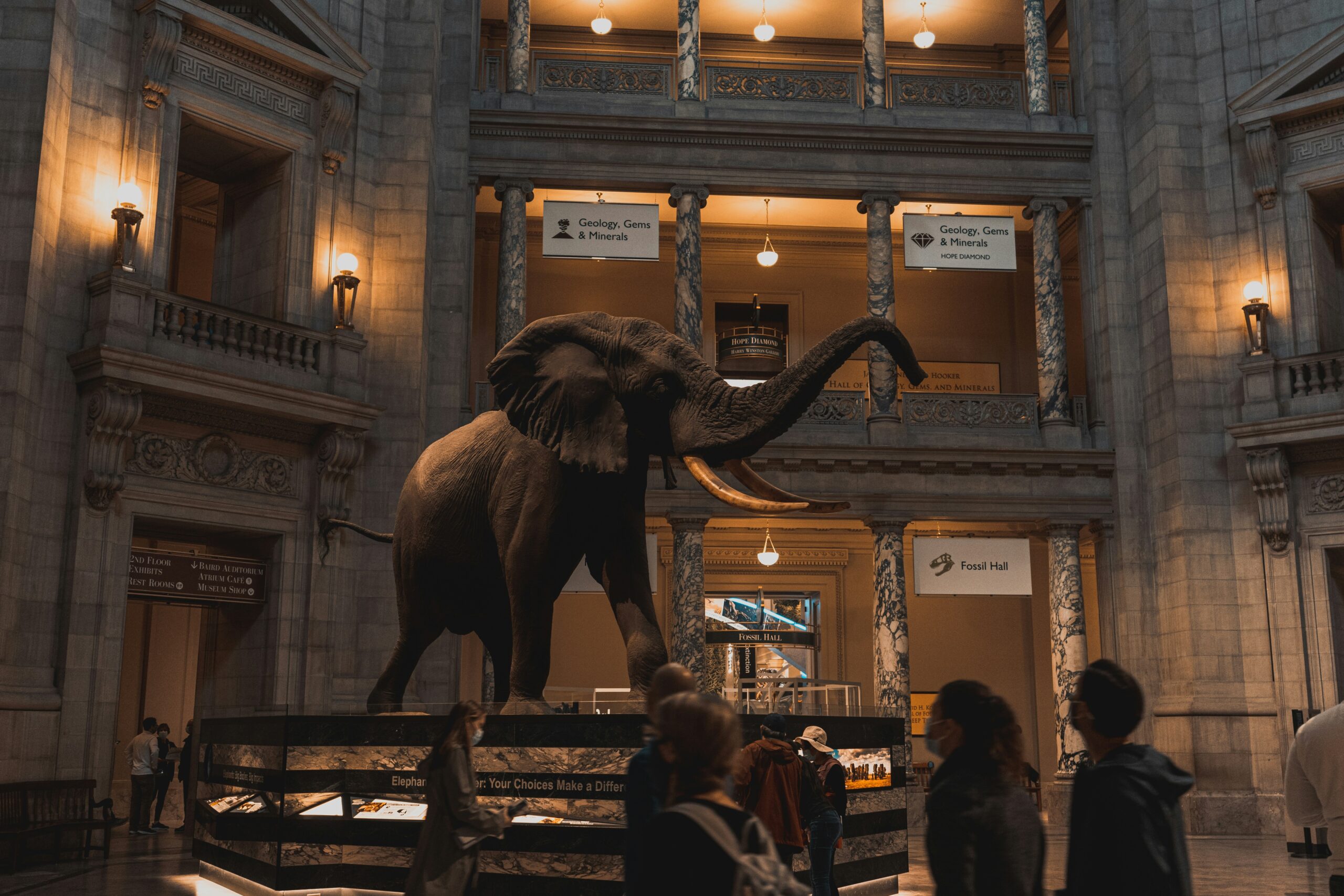
The museum’s collections total over 126 million specimens of plants, animals, fossils, minerals, rocks, meteorites, and human cultural artifacts. The Hope Diamond is here. So is a life-size African elephant in the rotunda. Younger student groups tend to go wild for this one.
Capitol Hill
No educational tour of Washington DC is complete without a visit to Capitol Hill, the seat of the legislative and judicial branches.
The U.S. Capitol Visitor Center is the main entry point for student groups. It’s located below the East Front plaza, and it’s free. The Supreme Court is also open to student groups Monday through Friday from 9 AM to 4:30 PM, with lectures given every hour on the half hour when the court is not in session.
The Library of Congress Jefferson Building is right next door. And it’s one of the most underrated stops in all of DC. The Great Hall alone is worth the visit. The ceiling work, the mosaics, the sheer scale of it; most students don’t expect it to look like that.
Some student programs on Capitol Hill also give groups a chance to witness live congressional committee hearings and even meet with their congressperson or their staff. If that kind of access is a priority, EE Tours can help coordinate it in advance.
National Archives
This one surprises students every time. There’s something about seeing the real thing that no classroom image can replicate.
The National Archives stores the original documents that set up the American government as a democracy in 1774. Your student group will have the chance to view the U.S. Constitution, the Bill of Rights, and the Declaration of Independence in the Rotunda for the Charters of Freedom.
The Archives also holds military records, immigration records, and historical photographs. For any group studying civics or American history, this stop earns its slot on the itinerary.
Arlington National Cemetery
Arlington National Cemetery offers official guided tours on board its own vehicles, giving student groups a structured way to explore this National Landmark.
The Tomb of the Unknown Soldier is the centerpiece. The Changing of the Guard ceremony happens every hour on the hour in warmer months and every two hours in winter. Students who witness it live tend to go completely silent. That’s not a small thing.
The graves of President Kennedy and Robert F. Kennedy are also here. Worth pointing out in advance so students arrive with some context.
The White House
Student groups don’t walk inside the White House on a standard tour. That kind of access requires a congressional request submitted weeks in advance through your local representative’s office. Most school groups skip this step and don’t get it.
But the exterior photo stop on the South Lawn side still works. Groups gather on the Ellipse, which sits directly south of the White House, and the views are clear and close enough. It’s still one of those photos that places a group right in the middle of American history.
If interior access is important to the trip, start the request process at least three months ahead.
Planning Tips for Student Group Tours to DC
Before the trip, a few things that actually matter:
- Timed entry passes for NMAAHC must be booked weeks out, especially during the spring. Don’t wait.
- Spring peak season (March to May) is busy. The city is packed with school groups. Book hotels and guides early.
- Comfortable walking shoes are non-negotiable. A full Mall day can cover 8 to 10 miles on foot.
- Budget for meals near the Mall — dining options around the Smithsonian campus are plentiful and group-friendly.
- Group size affects logistics heavily. A bus holds about 50 people. Groups over 30 often see per-person costs drop as fixed charges get split.
EE Tours handles all of this: the routing, the museum reservations, the group meals, and the guides. Teachers and chaperones get to focus on the students instead of the spreadsheet.
FAQs
How many days does a student group need in Washington DC?
Three full days is the sweet spot for most educational groups. Day one covers the National Mall and memorials. Day two handles Capitol Hill and the National Archives. Day three is flexible, usually split between a Smithsonian museum and Arlington National Cemetery. Two days can work for a tighter itinerary, but expect some tough cuts.
Are the Smithsonian museums free for student groups?
Yes. All Smithsonian museums on the National Mall are free for everyone, including student groups. The only exception is the IMAX theater inside the National Air and Space Museum, which charges a ticket fee. Some special exhibits at certain museums also carry a small admission cost.
Do students need to request White House tours in advance?
Yes, and well in advance. Requests go through your local member of Congress and need to be submitted at minimum four to six weeks before the visit. Many schools don’t realize this until it’s too late. If White House interior access is on the wishlist, reach out to your congressional representative’s office the moment the trip is confirmed.
What makes Washington DC different from other student educational destinations?
Most cities have history. DC is history. The buildings aren’t museums about the government; they are the government. Students can watch a Senate hearing, stand where Martin Luther King Jr. delivered his speech, and read the original Constitution in a single day. That combination of civics, culture, and American history in one walkable city is genuinely hard to match anywhere else in the country.