There are places that stop students cold. Not because a teacher told them to pay attention. Because they can’t help it.
The Museum of Natural History in NYC is one of those places. A 94-foot blue whale suspended from the ceiling. A Tyrannosaurus rex skull at eye level. Meteorites older than the planet students are standing on. It’s the kind of institution that doesn’t need to sell itself. But planning a group visit to a building with 45 permanent exhibition halls across multiple floors? That part takes actual work.
Skip the planning, and teachers end up sprinting past exhibits worth an hour of conversation. Students drift. Chaperones lose track. The whole day turns into organized chaos. Here’s how to do it right.
Book It Way Earlier Than It Seems Necessary
To have availability, school groups must plan field trips at least five weeks in advance. And that’s the floor, not the sweet spot. Groups hoping to add guided programs or specialized experiences should aim for 8 to 10 weeks out.
Reservations go through AMNH Central Reservations at (212) 769-5200, Monday through Friday, 9am to 5pm. NYC school and camp groups receive free general admission for weekday visits. Schools from outside the city will have separate pricing tiers. Either way, the museum needs a confirmed headcount for both students and chaperones before locking anything in. Get that number settled before calling.
The museum accepts checks, money orders, Discover, Visa, MasterCard, and American Express. NYC DOE schools paying via purchase order have vendor number AME565000 and must bring a copy with the confirmation number on the day of the visit.
One more thing: use the Temporary Hall Closures page on the AMNH website to verify that the halls planned for the visit will actually be open that day. Nobody wants to build the entire itinerary around the dinosaur fossils and arrive at a “temporarily closed” sign.
Choose a Hall of Focus Before Arriving
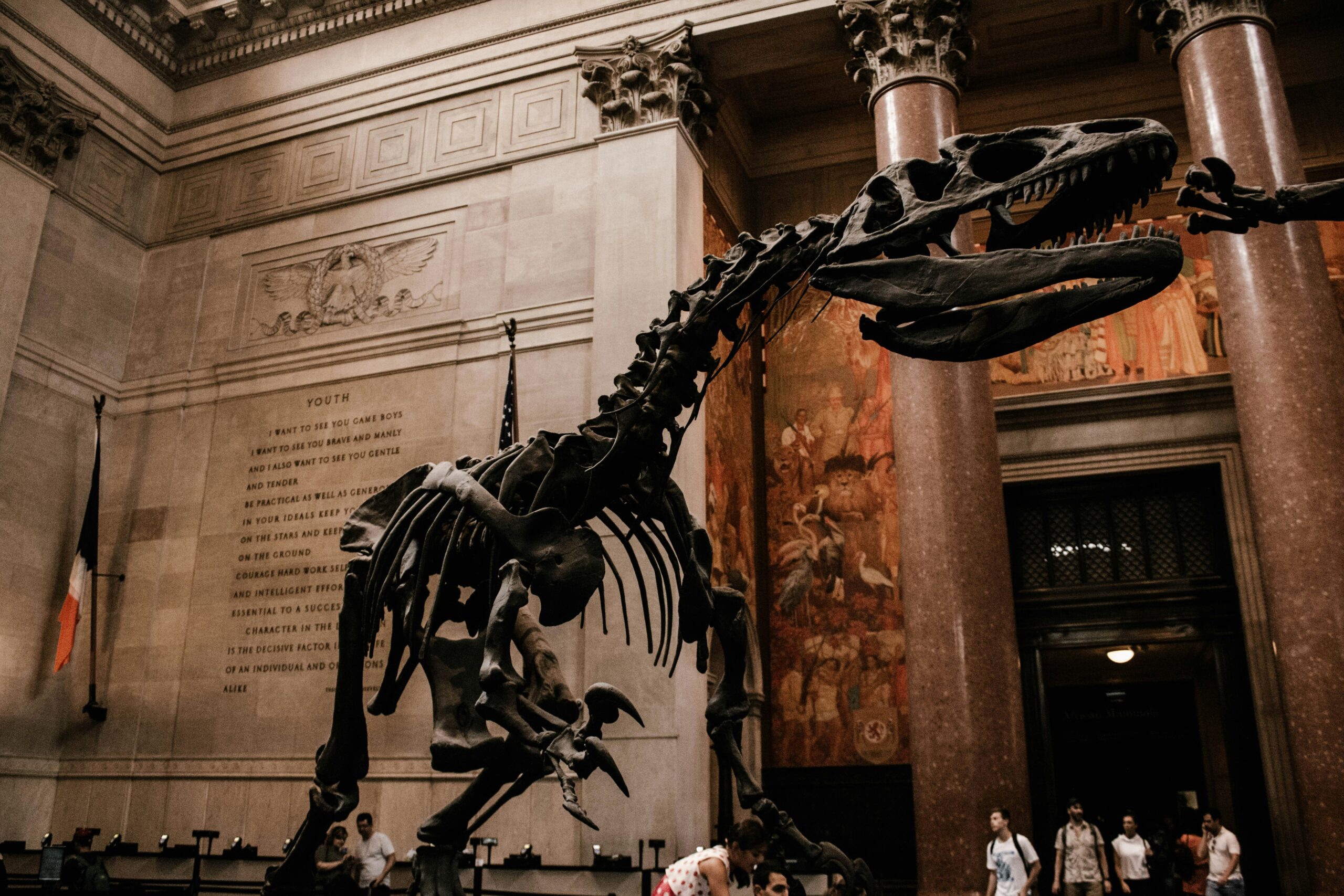
Most teachers make their first big mistake right here. They show up without a clear anchor. The museum is enormous. Forty-five halls. Trying to see everything in one day doesn’t just fail. It exhausts everyone, and students retain almost nothing.
AMNH asks school groups to select a Hall of Focus when booking. Museum staff use this selection to deploy available resources to support the visit. The selection does not limit where the group can go. It just gives the day a goal.
Available hall options include: African Mammals, African Peoples, Asian Peoples, Biodiversity, Dinosaurs (Fossils), Gems and Minerals, Human Origins, Insectarium, Meteorites, Mexico and Central America, North American Mammals, Northwest Coast, Ocean Life, Planet Earth, South American Peoples, and Universe.
Pick whichever maps most tightly to what students are already studying. A 6th-grade unit on earth science fits naturally with Planet Earth or Gems and Minerals. Evolution units connect well with Dinosaurs or Human Origins. The visit has a purpose. Students leave with something they can actually use in class.
The Add-Ons: What’s Worth It and What to Skip
General admission covers all permanent exhibitions. But there are a few ticketed experiences layered on top, and some of them are genuinely excellent for a school group.
NYC school groups can add the Space Show, giant-screen film, and the Davis Family Butterfly Vivarium for $7 per person, per show. These are available for weekday visits only.
Experience | School Add-On Cost | Best Grade Level |
Hayden Planetarium Space Show (“Encounters in the Milky Way”) | $7/person | Middle and High School |
Davis Family Butterfly Vivarium | $7/person | Elementary and Middle School |
Giant Screen Film (Passport to the Universe) | $7/person | All Ages |
Invisible Worlds (Immersive 360° Experience) | Varies | Middle School and Up |
Impact: The End of the Age of Dinosaurs | Varies | All Ages |
The Space Show is the consistent standout. Students who walk in convinced they hate science usually exit with at least one real question they want answered. Surprisingly effective for a 25-minute presentation. The Butterfly Vivarium runs quieter and slower, which makes it better for younger groups or students who need a sensory reset mid-day.
For school groups that include students with sensory sensitivities, the Hayden Planetarium screens a sensory-friendly version of the Space Show in a more relaxed environment. Schools should request this specifically when making their reservation.
A new exhibit, Apex, is now on view in the Kenneth C. Griffin Exploration Atrium. Thought to be one of the most complete Stegosaurus specimens ever uncovered, it’s worth building into the itinerary for any group focused on fossils.
Getting to the Museum of Natural History In NYC
For groups traveling from outside New York, a private motor coach is the cleanest solution. Parking in that part of Manhattan is expensive and genuinely painful to coordinate. Drop off at the Central Park West entrance, set a coach pickup time, and move on.
For groups already in the city:
- B or C train to 81st Street. Groups arriving by subway may enter via the subway entrance located at the downtown end of the 81st Street B and C station.
- 1 train to 79th Street and Broadway. A two-block walk west from that stop.
- If the subway entrance is closed, groups will be directed to the Rose Center for Earth and Space entrance. Note that the 81st Street subway station and subway entrance to the Museum are not wheelchair accessible.
The museum is open daily from 10am to 5:30pm. Weekday visits are noticeably quieter than weekends. That matters when managing 30 students across multiple floors.
Day-of Logistics Teachers Forget Until It’s Too Late
This is where most field trips go sideways. Not because of the exhibits. Because of the details nobody locked in beforehand.
- Chaperone ratio: One adult chaperone is required for every 10 students. Chaperones must always remain with their group. This is not flexible. Groups that arrive under-chaperoned will have trouble at check-in.
- Check-in process: After going through the metal detectors, the group’s first stop is the school reception area on the first floor. Any adult can check in the group using the order number at the top of the confirmation email. Share that confirmation number with every chaperone before departure day. If the lead teacher gets separated, someone else needs to be able to step in.
- Lunch: Eating and drinking, other than water, is prohibited in Museum galleries. The museum has on-site food options, but for large groups running a tight schedule, a packed lunch is faster and simpler.
- Photography: Photography for personal use is allowed with hand-held cameras using available light or electronic flash attachments. Selfie-sticks are not permitted. Tripods and lights may not be used. No photography or filming is permitted in the theaters, including the Hayden Planetarium Space Theater.
- Behavior expectations: Groups should use inside voices and be mindful of others. Running, climbing, sitting on exhibits or railings, and yelling are not allowed. Many artifacts, specimens, paintings, and murals are not to be touched.
Prepare Students Before They Walk Through the Door
A visit without any prior context is mostly just students staring at large things. One class period of preparation makes the actual museum experience ten times richer.
The “Resources for Learning” section of the AMNH website has hundreds of online resources designed to help meet national science, social studies, and global studies standards. Hall Guides are available for specific permanent and special exhibitions.
Cover the basics before the trip. What is a fossil? What does biodiversity mean in practice? How do scientists figure out what a dinosaur actually looked like? Students who walk in with those anchors will ask better questions, pay closer attention, and remember more of what they saw.
For 4th-grade groups specifically, AMNH offers “Seeds to Stories: Exploring Traditional Foods of the Haudenosaunee,” a guided field trip experience for schools looking to supplement their Native New York unit. It’s worth requesting when booking if that grade level is making the trip.
Why Out-of-State Groups Should Think Bigger Than One Stop
Planning a field trip to the Museum of Natural History in NYC from another state adds real complexity. Transportation. Hotels. Meals. Sequencing across multiple days. That’s a lot to manage alongside everything else a teacher is already handling.
Groups looking to plan a fully customized student itinerary can explore EE Tours’ New York tour options to see how each experience can be built around specific curriculum goals. The AMNH becomes one anchor in a larger NYC educational itinerary. Paired with Central Park, a Hayden Planetarium show, and a guided history walk through downtown Manhattan, the museum visit gets full context instead of feeling like an isolated afternoon.
EE Tours specializes in student groups. Guides, coach transport, chaperoning support, and custom day-by-day scheduling. Teachers who’ve traveled with them describe the logistics as genuinely stress-free. The kind of backup that turns a good trip into one that students talk about for years.
FAQs About Field Trips to the Museum of Natural History NYC
1. Is the Museum of Natural History in NYC free for school groups?
NYC public school groups get free general admission for weekday visits. Schools from outside the city follow separate group pricing, though rates for student groups are significantly lower than standard adult admission. Add-on experiences like the Space Show or Butterfly Vivarium cost $7 per person for school groups.
2. How far in advance should a school book a field trip to AMNH?
At least 5 weeks in advance per AMNH requirements. For guided programs, sensory-friendly experiences, or add-ons like the Space Show, 8 to 10 weeks is the safer window. Popular dates fill up faster than teachers expect.
3. What is the chaperone-to-student ratio at AMNH?
One adult chaperone for every 10 students. All chaperones must stay with their group throughout the visit and are fully responsible for student behavior and safety.
4. How long should a school group plan to spend at the museum?
For a focused visit covering two to three halls plus one add-on experience, four hours is usually enough. Groups that include lunch and a planetarium show should plan for five to six hours. Three to four hours is also the floor for any group that wants to walk away feeling like they actually saw something.