Most first-time visitors to New York City make a beeline for Times Square, the High Line, maybe Central Park. Which is fine. Totally fine. But if you want to see the New York that actually exists beneath the tourist polish, the East Village is where you go.
The East Village is many things to many people. Birthplace of punk. Haven for artists. Home to over 65,000 New Yorkers who chose it specifically because it refuses to be anything other than itself. It’s loud, layered, and a little rough around the edges. And honestly? That’s exactly why it works.
Here are the 9 best things to do in the East Village when you’re visiting for the first time.
East Village First-Timer Quick Reference
Activity | Best Time | Cost |
Walk St. Mark’s Place | Anytime (evenings are electric) | Free |
McSorley’s Old Ale House | Weekday afternoons | Low |
Tompkins Square Park | Morning or late afternoon | Free |
East Village Food Scene | Lunch or early dinner | Affordable |
Vintage Shopping | Weekday mornings | Varies |
Merchant’s House Museum | Check seasonal hours | Paid entry |
Street Art Walk | Daytime | Free (or guided tour) |
6BC Botanical Garden | Spring through fall, check hours | Free |
Guided Walking Tour | Morning start works best | Varies by operator |
1. Walk St. Mark’s Place (Slowly. Don’t Rush This.)
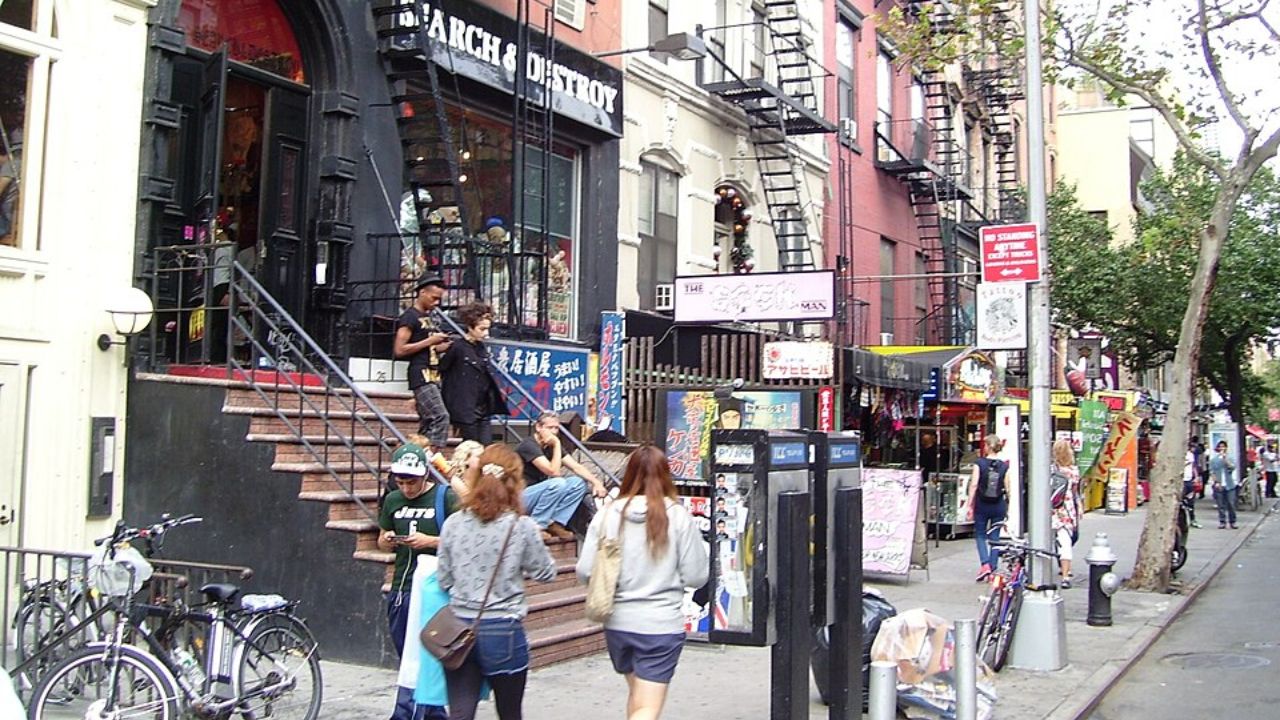
St. Mark’s Place runs along 8th Street between Third Avenue and Avenue A and is arguably the East Village’s most notable street, bursting with culture through its retail shops, street vendors, restaurants, and nightlife. In a city that gentrifies more every day, St. Mark’s Place holds onto its gritty, authentic feel.
Almost every building on these three blocks tells a story from a time when the East Village embodied creative bohemianism. Andy Warhol ran multimedia events here. The Velvet Underground. The Yippies. Punk kids who had nowhere else to go.
Look, you don’t need an itinerary for this street. Just walk it. Slowly. Scan the window displays, pop into whatever looks interesting, grab a slice from a counter that’s been there since before you were born. That’s the whole move.
2. Have a Beer at McSorley’s Old Ale House
Some places in New York are famous because they’re marketed well. McSorley’s is famous because it genuinely earned it.
Opened somewhere between 1854 and 1862 (the exact year is still debated), McSorley’s is one of the most historic bars in New York City. So entrenched in history, not a single item has been removed from the walls since 1910.
They pour just two beers, light or dark ale, in minimalist mugs. Bartenders in suspenders serve up Irish wit while the scent of pickles mingles with mustard-slathered cheese plates. Sawdust cushions your step, and a century’s worth of memorabilia hangs overhead, including newspaper clippings, wishbones, and rusted artifacts that spark more than a few curious conversations.
It’s not cool in the Instagram sense. It’s cool in the “this place has survived everything New York has thrown at it for 170 years” sense. Go on a weekday afternoon if you can. Way less crowded.
3. Actually Spend Time at Tompkins Square Park
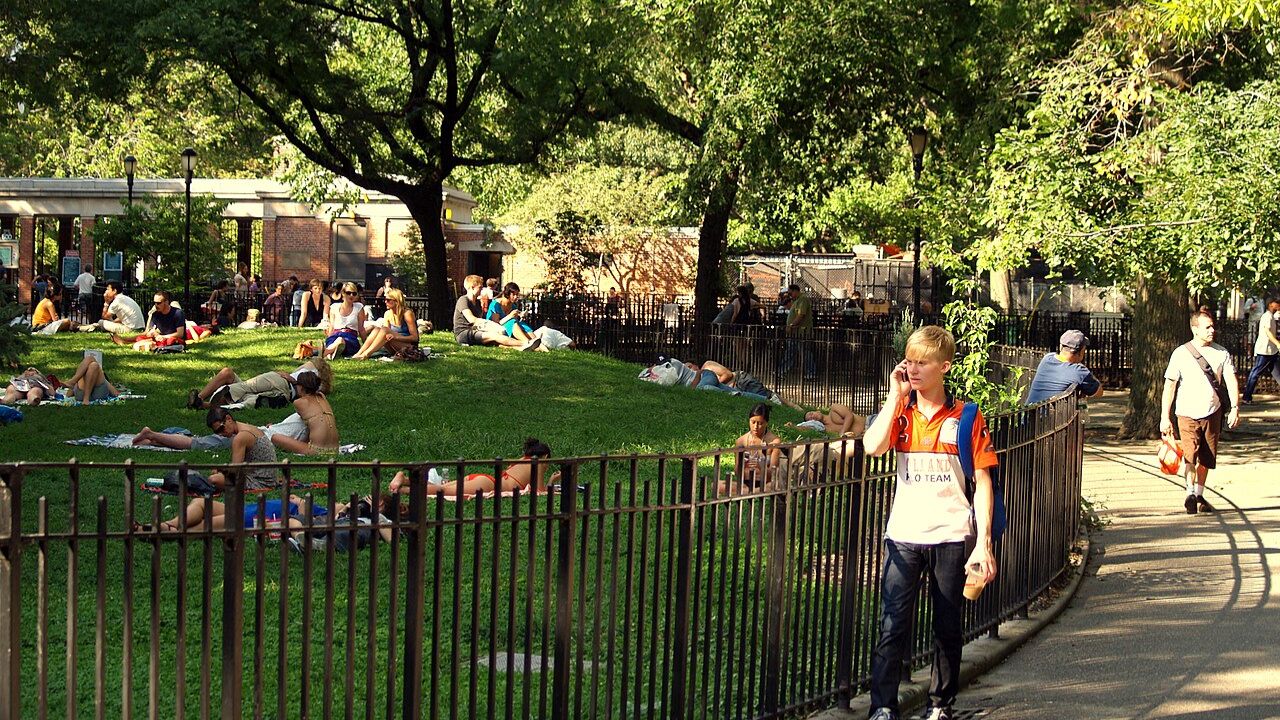
Every neighborhood in Manhattan has a park. But Tompkins Square hits differently.
It’s been transformed from what was once a hotbed for crime and drugs into a beautiful 10.5-acre green space. Basketball courts, a large dog park, and live bands playing on any given afternoon. It’s a peaceful, tree-lined retreat steeped in local history, perfect for strolling, picnics, and community events.
And every August, it hosts a stop on the Charlie Parker Jazz Festival. Free admission. Which is insane for New York.
Sit on a bench for 20 minutes here, and you’ll see more real New York than you will in a full day at any major tourist attraction. That’s not an exaggeration.
4. Eat Your Way Through the Neighborhood
Here’s the thing about the East Village food scene. It’s not one thing. It’s everything, crammed into a few square blocks at prices that feel almost suspicious by Manhattan standards.
The neighborhood is known for its wide range of cuisines that reflect the ethnic diversity of NYC, and the prices can be unbelievably low.
A quick breakdown of what to look for:
Cuisine | What to Know |
Japanese Ramen | Multiple spots on and near St. Mark’s; go before 6pm or expect a wait |
Classic Italian | John’s of 12th St. has been open since 1908 and still has a separate vegan menu |
Bagels | Tompkins Square Bagels on Avenue A is a local institution, full stop |
Coffee | Indie cafés with serious beans and backyard patios tucked all over the neighborhood |
International Street Food | Avenue A and the surrounding blocks rotate vendors constantly |
And if you want to actually understand why the food here is so diverse (it goes deep into immigration history), a walking food tour of St. Mark’s Place takes you to five different restaurants and vendors with a guide who knows the neighborhood, covering everything from Italian and Japanese to Middle Eastern and Latin eateries. Surprisingly effective way to spend a few hours.
Groups serious about food as a cultural experience should look at e.e. Tours’ NYC Culinary Tour, which includes cooking demos, farm-to-table visits, and master classes with working pastry chefs.
5. Get Lost in the Vintage Shops
No qualifying statement needed here. No other neighborhood in NYC comes close to the quantity and quality of its vintage, thrift, and designer consignment shops.
Some names worth knowing:
- L Train Vintage — family-owned since 1999, genuinely good selection
- Cure Thrift at 111 E. 12th St.
- AuH2O at 84 E. 7th St.
- Tokio 7 for higher-end consignment
Block out two hours minimum. Don’t go on a Saturday if you can help it. And carry cash because some of the smaller spots don’t do cards.
6. Visit the Merchant’s House Museum
Most first-time visitors skip this. Which is a mistake, honestly.
Built in 1832, this elegant red-brick and white-marble row house at 29 E. 4th Street was lived in by the same family for almost 100 years. It’s the only fully intact 19th-century family home in New York City. The furniture, the dishes, the personal belongings; all original.
Walking through it feels quietly surreal. Like the city forgot to knock it down. There are ghost tours too if that’s your thing (the Tredwell family apparently never fully left). But even without the supernatural angle, it’s one of the most genuinely interesting historical stops in all of Lower Manhattan.
7. Look for the Street Art
The East Village has been producing serious artists since before it had its current name. In the 1980s, galleries here were among the first in NYC to show the work of Jean-Michel Basquiat and Keith Haring.
That creative current never stopped. It just moved outside. The walls, shutters, and alley gates across the neighborhood carry murals that range from politically sharp to just flat-out beautiful. Some commissioned, some not.
The trick is knowing what you’re looking at and why it’s there. A guided walking tour makes a real difference here, because context turns a cool mural into something that actually means something.
8. Find the 6BC Botanical Garden
This one is genuinely hidden. Most visitors walk right past it.
The 6BC Botanical Garden is one of the most unique things about the East Village. A hidden paradise with a treehouse, unlike anything else in the city. It’s one of several community gardens that locals carved out of vacant lots over the decades, and it has this quiet, otherworldly quality that’s hard to describe until you’re standing in it.
Check visiting hours before you go because they vary by season. But if it’s open? Go. It’s one of those small New York moments that sticks with you longer than the obvious stuff.
9. Take a Guided Walking Tour of the Neighborhood
Look, you can wander the East Village on your own and have a great time. But you’ll only be seeing the surface.
The area was once Kleindeutschland, Little Germany, a dense immigrant enclave of German-language newspapers, schools, churches, and beer halls in the mid-1800s. Then came Eastern European immigrants, then Latinos, then Beatnik poets, then hippies, then punks. Each wave left something behind. And most of it is still visible if you know where to look.
Groups with a focus on American history and immigration will find e.e. Tours’ New York History Tour pairs perfectly with an East Village visit, covering everything from Ellis Island to the Financial District in a single structured itinerary.
On a proper walking tour, visitors uncover hidden landmarks, striking architecture, and legendary gathering places, wandering past historic tenements and street art while hearing the stories of counterculture icons who shaped the neighborhood.
For educational groups and adult travelers especially, this kind of structured, story-driven experience is the difference between visiting a neighborhood and actually understanding one. It transforms a good afternoon into something you’ll still be talking about a week later.
Getting There
The simplest options are the 8 St-NYU stop on the R/W or Astor Place on the 6. Coming crosstown, the L to 3rd Avenue puts you two blocks south. Once you’re in the neighborhood, everything is walkable. Give yourself a full day if you can swing it.
The East Village doesn’t perform for tourists. It doesn’t need to. It’s just there, doing its thing, layered with more history and personality than most entire cities manage to accumulate. For first-time visitors who want New York to feel real? This is the neighborhood. Start here.
FAQs
What are the best things to do in the East Village for first-time visitors?
Popular activities include exploring Tompkins Square Park, walking along St. Mark’s Place, visiting independent bookstores, and enjoying the neighborhood’s diverse food scene.
Is the East Village good for food lovers?
Yes. The East Village is known for its wide variety of restaurants offering everything from Ukrainian cuisine to ramen and classic New York pizza.
How long should visitors spend exploring the East Village?
Half a day works for a quick visit, but many travelers spend a full day exploring restaurants, parks, shops, and nightlife venues.
Are guided tours available in the East Village?
Yes. Walking tours led by local guides provide insights into the neighborhood’s history, art scene, and cultural communities.