Harlem doesn’t ease you in gently. It just grabs you.
The second those subway doors open at 125th Street, something shifts. There’s a sound, a smell, an energy that hits differently from anywhere else in New York City. And honestly, that’s kind of the whole point. More than any other neighborhood in Manhattan, Harlem has a story.
A long, layered, world-changing story. Jazz legends. Civil rights heroes. The greatest literary movement Black America ever produced. All of it happened right here, on these streets, in these brownstones.
For first-time visitors, figuring out the best things to do in Harlem can feel genuinely overwhelming. Because there’s so much. This guide cuts through it and gets straight to the ten experiences that actually matter, the ones that stick with you long after you’re back home.
And if you’re planning a group trip (a school excursion, a cultural tour, a curated adult weekend), Harlem rewards that kind of guided, intentional exploration in ways solo wandering just can’t match.
Quick Overview: What to Expect in Harlem
Before the list, here’s how the neighborhood actually breaks down:
Area | Known For |
Central Harlem | Jazz, soul food, brownstones, Apollo Theater |
East Harlem (El Barrio) | Latino culture, El Museo del Barrio, street murals |
Sugar Hill | Historic architecture, Langston Hughes, Strivers’ Row |
West Harlem | Columbia University, Cathedral of St. John the Divine |
Best time to visit? Sunday. Without question. The streets come alive after church, brunch spots fill up fast, and the neighborhood shows its truest self. Just know it gets busy, especially around 125th.
1. Experience Amateur Night at the Apollo Theater
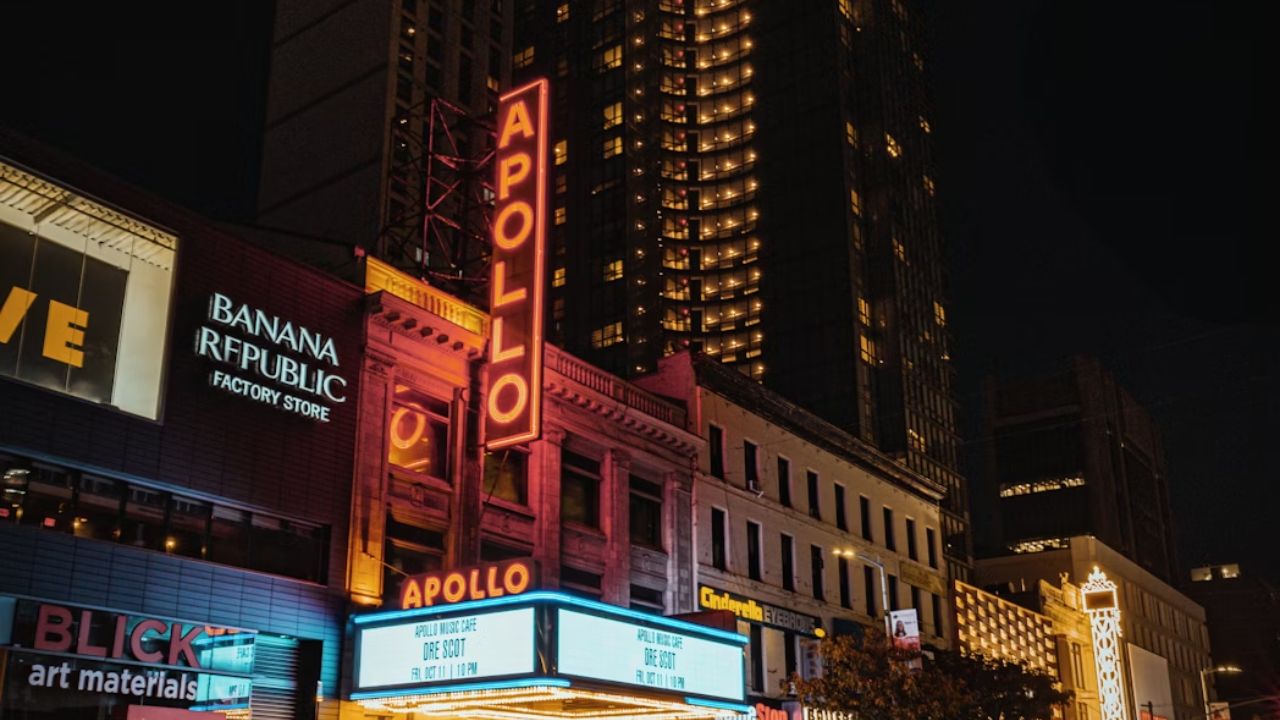
There is genuinely nowhere else in America quite like the Apollo.
Opened in 1914, this theater has launched careers and popularized entire genres through its devotion to showcasing Black talent. The famous Amateur Nights, which started back in 1934, gave early platforms to artists like James Brown, Ella Fitzgerald, Sammy Davis Jr., Billie Holiday, and Lauryn Hill. That list alone should tell you everything.
But here’s what nobody really warns you about: the crowd. Amateur Night is still running, still electric, and still the kind of show where the audience will boo an act off the stage without hesitation. Which sounds harsh until you’re actually sitting in that room and you realize it isn’t cruelty, it’s Harlem holding performers to the highest possible standard. There’s a respect baked into it, weirdly.
- Address: 253 W 125th St, New York, NY
- Pro tip: Book in advance. Amateur Night genuinely sells out.
- Great for: Music lovers, school groups, cultural tours, first-time NYC visitors
2. Attend a Gospel Service at Abyssinian Baptist Church
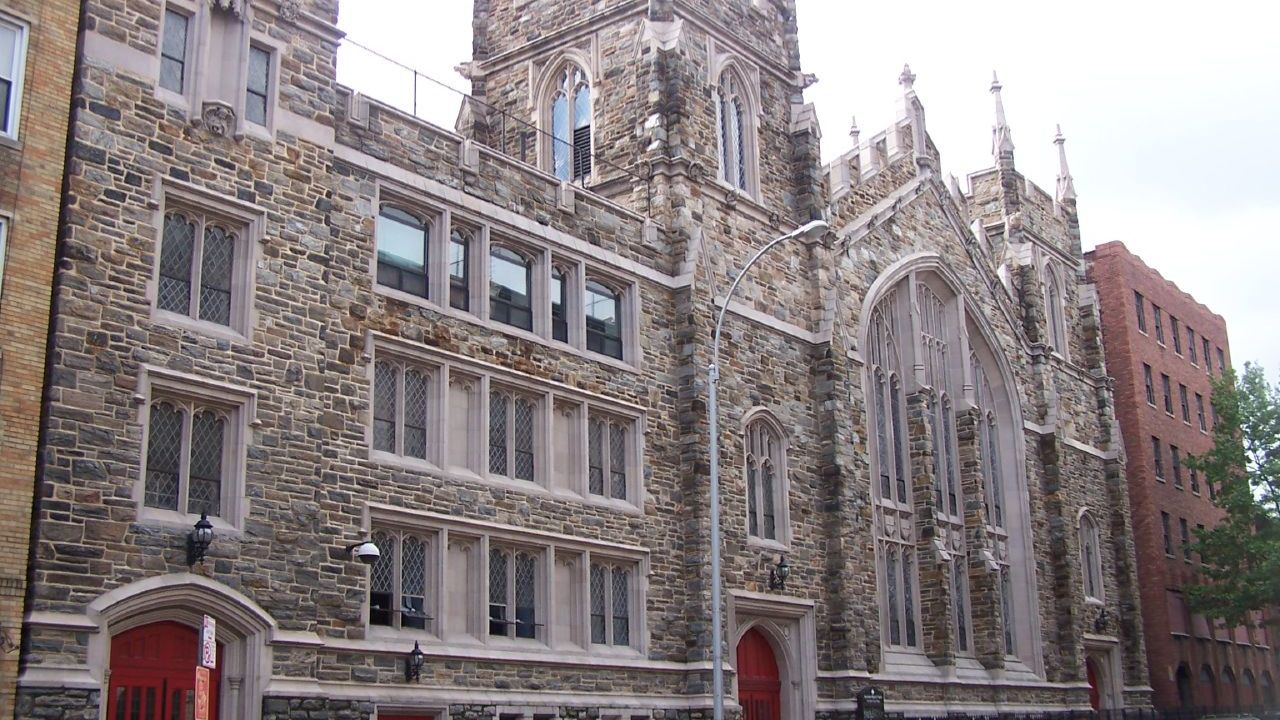
This one is hard to describe without underselling it.
Founded in 1808, the Abyssinian Baptist Church is one of the oldest African American Baptist churches in the United States. The choir alone is worth the trip uptown. It’s the kind of thing where people around you start quietly crying, and you don’t even find it strange because you kind of get it.
Visitors are welcome to attend Sunday services, though fair warning: it’s a popular spot for tourists and lines form early. Dress modestly, arrive with time to spare, and remember that this is an active place of worship. Not a performance. Not a show. That distinction matters enormously to the congregation, and treating it with that kind of respect makes the whole experience better for everyone.
- Address: 132 W 138th St, New York, NY
- Best for: Cultural immersion, spiritual experiences, educational tours
3. Explore the Schomburg Center for Research in Black Culture
Walk in curious and with an open mind. Walk out genuinely transformed. That’s not an exaggeration.
The Schomburg Center is one of the New York Public Library’s research branches, built around a collection originally amassed by Afro-Puerto Rican historian Arturo Schomburg starting in the early 1900s. Today it houses more than 11 million items. Eleven million. And it hosts rotating exhibitions celebrating leaders of the Harlem Renaissance that are consistently thoughtful and well-presented.
This is one of the most important archives of Black history in the entire world. And it’s free to visit, which is honestly kind of insane when you think about the scale of what’s here. If you only have time for one “educational” stop in Harlem, this is the one.
- Address: East 127th Street, Harlem, New York
- Admission: Free
- Best for: History lovers, student groups, rainy day visits
4. Visit the (New) Studio Museum in Harlem
The Studio Museum just got a very serious upgrade.
It finally has a proper home on 125th Street: a seven-story, 82,000-square-foot building designed by David Adjaye, with galleries featuring rotating selections from the permanent collection.
Works by Jean-Michel Basquiat, Faith Ringgold, Jordan Casteel. Names that belong in any serious conversation about American art, full stop.
For groups exploring African American artistic tradition, this place is essential. The building itself is stunning, and the lower-level cafe (run by Settepani, a long-standing Harlem institution) is a genuinely good spot for a coffee and a breather between galleries.
- Address: 144 W 125th St, New York, NY
- Best for: Art lovers, educational tours, arts-focused groups
5. Walk Through Strivers’ Row
Some blocks just feel different the moment you turn onto them. Strivers’ Row is absolutely one of them.
The four rows of townhomes on W. 138th Street became home to Harlem’s Black elite from around 1910 to the 1930s. Doctors, politicians, artists. Congressman Adam Clayton Powell Jr. had a home here. So did performer Bill “Bojangles” Robinson.
The architecture is beautiful on its own terms, but knowing who lived here and what they were building during one of the most restrictive periods in American history, that’s where it starts to feel genuinely moving.
- Location: W 138th and W 139th Street
- Admission: Free (outdoor walking)
- Best for: Architecture enthusiasts, history tours, photography
6. Dig Into Jazz History at the National Jazz Museum in Harlem
Jazz didn’t just happen in Harlem. In a lot of ways, jazz became jazz in Harlem.
The National Jazz Museum is dedicated to preserving the music’s history and bringing new talent into the community. Visitors can listen to live recordings from the 1930s and 1940s, look through rare artifacts, and spend time in a reading room stacked with books on jazz and Harlem culture. Rare recordings only available at the museum, that kind of thing.
Two prominent jazz musicians, Loren Schoenberg and Christian McBride, lead the museum. Duke Ellington, Charlie Parker, and Thelonious Monk all have a presence here. For any group with even a passing interest in American music, this stop is non-negotiable. And the live performances they host are surprisingly accessible, not stuffy at all, which is refreshing.
- Location: Harlem, New York
- Best for: Music history tours, school trips, adult cultural groups
7. Eat Soul Food. Like, Actually Commit to It.
Look, Harlem’s food scene doesn’t get nearly enough credit outside the neighborhood. Which is baffling.
Amy Ruth’s and Melba’s are the two Black-owned soul food spots that locals argue about constantly (in that passionate, affectionate way where everyone has a strong opinion and nobody’s really wrong). Fried chicken, braised oxtails, candied yams, mac and cheese, cornbread. The classics, done right.
For something more elevated, Red Rooster, owned by chef Marcus Samuelsson, is a proper destination: great food, strong cocktails, and live music from local musicians most evenings. Worth the reservation.
Here’s a quick breakdown:
Restaurant | Vibe | Known For |
Amy Ruth’s | Classic, no-frills | Fried chicken and waffles |
Melba’s | Warm, neighborhood feel | Southern comfort dishes |
Red Rooster | Upscale, lively | Modern soul food, live jazz |
Harlem Shake | Casual | Burgers and shakes |
Plan for a real meal. Not a quick stop. A proper sit-down, take-your-time, order-one-more-thing experience.
Planning a food-focused group visit? Check out EE Tours Culinary Tours to see how a properly guided tasting experience through neighborhoods like Harlem comes together.
8. Visit the Graffiti Hall of Fame in East Harlem
For street art people, this is a full-on pilgrimage spot.
Local artist Ray “Sting Ray” Rodriguez created it back in 1980, before street art had any mainstream legitimacy, specifically as a safe space for Harlem artists to work and develop their craft. For nearly 40 years, the murals here have documented the evolution of graffiti writing from the 1980s up through today.
It’s not a museum with velvet ropes. It’s outside, alive, constantly changing. Raw and real in a way that’s hard to replicate. Bring a camera and give yourself more time than you think you need.
- Location: East Harlem (Park Avenue and 106th Street)
- Admission: Free
- Best for: Art tours, photography, urban culture enthusiasts
9. Take a Guided Walking Tour of the Harlem Renaissance Sites
Here’s the honest truth about Harlem: a lot of what makes it extraordinary is completely invisible if you don’t know what you’re looking at.
The buildings are there. The streets are there. But the context is everything. A guided walking tour connects those dots in ways that solo exploration simply can’t. Guides who were actually born and raised in Harlem bring a kind of local knowledge that transforms a good afternoon into something that genuinely stays with you.
For groups, especially school trips and cultural tours in particular, a structured walking tour is often the single best investment of the whole visit.
Popular tour types:
- Harlem Gospel Walking Tour
- Harlem Civil Rights Walking Tour
- Birthplace of Hip-Hop Tour (covers Harlem and the Bronx)
- Harlem Renaissance Architecture Tour
Each one approaches the neighborhood from a different angle, and honestly, you could do two in a day and never feel like you’re covering the same ground.
For school groups, adult tours, and corporate experiences, working with a tour operator who knows Harlem deeply changes everything.
10. Spend Time in Marcus Garvey Park
Parks don’t usually make the must-do cut on a first visit anywhere. But Marcus Garvey Park is different.
After a renovation, the cast-iron fire watchtower at the top (built in 1857, one of the last of its kind in the country) is back and looking extraordinary. The park hosts Classical Theatre of Harlem productions every summer, including outdoor Shakespeare with a Harlem Renaissance twist, which sounds niche but is actually a fantastic evening out.
The location is perfect too. Surrounded by brownstones, close to Red Rooster and Sugar Hill Creamery (the ice cream there is genuinely great, try the Chairperson of the Board if it’s available). On a Sunday afternoon, it captures something essential about Harlem that no museum can quite capture.
- Location: Between 120th and 124th Streets and Madison Ave
- Best for: Families, outdoor relaxation, summer events
Planning Your Harlem Visit: Practical Tips
A few things that actually make a difference, especially for first-timers:
- Getting there: A, B, C, or D train to 125th Street. Straightforward.
- Best day: Sunday for the fullest neighborhood experience. Weekdays, if you want fewer crowds at museums.
- Budget: Most of Harlem’s best experiences are free or low-cost. Museums, walking, and churches. No need to spend a lot to have a genuinely great day.
- Respect the neighborhood: Harlem is a living community, not a theme park. Be a guest.
- For groups: Working with a tour operator who actually knows Harlem changes everything. The context they provide is the difference between a good trip and one people talk about for years.
Why Harlem Belongs on Every NYC Itinerary
Most first-time visitors to New York never get above 59th Street. Times Square, the High Line, Brooklyn Bridge. All fine. But they’re missing something that can’t be replicated anywhere else in the city.
Harlem is where American music was reinvented. Where Black literature found its loudest, most lasting voice. Where a community under sustained pressure built cultural institutions of genuine world importance. The things to do in Harlem aren’t just activities on an itinerary. They’re chapters in one of the most significant stories the country has to tell.
And the best part? You can actually experience it. Not just read about it in a textbook or watch a documentary. Show up, walk the streets, sit in a pew, hear the music, eat the food. It’s all still there, still alive, still worth every minute.
Planning a group trip to Harlem or New York City? EE Tours builds customized educational, culinary, arts, and cultural tours for school groups, adult travelers, and corporate teams. Get in touch to create an itinerary that brings Harlem’s extraordinary history to life.
FAQs
- What is the best time to visit Harlem?
Sunday mornings are popular for gospel services, while evenings are ideal for live jazz and dining. Spring and fall offer the most comfortable weather for walking tours.
- Is Harlem safe for tourists?
Yes, Harlem is generally safe for visitors, especially around major attractions and during the day. Like anywhere in New York City, staying aware of surroundings is important.
- How long should first-time visitors spend in Harlem?
At least half a day is recommended to explore key landmarks, enjoy a meal, and experience the cultural highlights without rushing.