New York City will overwhelm you. That’s kind of the deal. But the West Village? The West Village does this thing where it slows you down without you even noticing.
One minute you’re rushing off the subway, next minute you’re sitting outside some ivy-covered brownstone with a cappuccino, wondering why you don’t live here.
It’s that kind of neighborhood.
And look, there’s no shortage of “best things to do in the West Village” lists floating around the internet. Most of them read like a Google Maps export. This one’s different. Because the West Village isn’t just a checklist of stops.
It’s a vibe, a pace, a specific quality of afternoon that New York doesn’t really offer anywhere else. So here are 9 classic things to do in the West Village that actually hold up, whether you’re visiting for the first time or planning a group trip through the city.
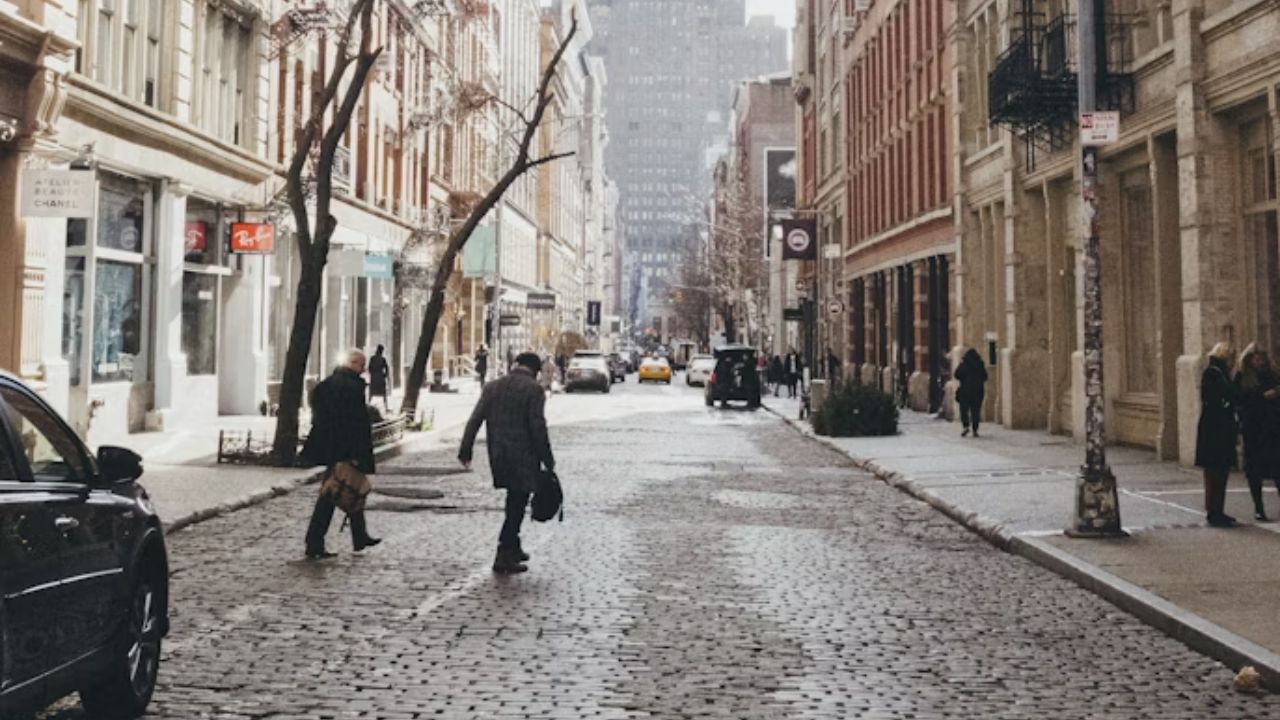 Before anything else. Put the phone away. Or at least stop refreshing it.
The best streets in the West Village are Grove Street, Perry Street, Christopher Street, Carmine Street and W 10th and 11th. These blocks are genuinely some of the prettiest in all of Manhattan. Ivy on brick. Gas-lamp style streetlights. Dogs with better haircuts than most people. It feels almost impossibly European for a city this loud and fast-moving.
Here’s the thing, though: half the magic of the West Village is in the accidental discovery. The tiny bookshop you didn’t plan on. The jazz is leaking out of a basement at 2pm on a Wednesday. The corner that looks exactly like a movie set (because it basically is one, more on that later).
Give yourself at least 30 minutes of pure wandering before pulling up any kind of map. It sounds obvious, but most visitors skip straight to the list and miss the whole point of the neighborhood.
Quick cheat sheet for the best streets:
Before anything else. Put the phone away. Or at least stop refreshing it.
The best streets in the West Village are Grove Street, Perry Street, Christopher Street, Carmine Street and W 10th and 11th. These blocks are genuinely some of the prettiest in all of Manhattan. Ivy on brick. Gas-lamp style streetlights. Dogs with better haircuts than most people. It feels almost impossibly European for a city this loud and fast-moving.
Here’s the thing, though: half the magic of the West Village is in the accidental discovery. The tiny bookshop you didn’t plan on. The jazz is leaking out of a basement at 2pm on a Wednesday. The corner that looks exactly like a movie set (because it basically is one, more on that later).
Give yourself at least 30 minutes of pure wandering before pulling up any kind of map. It sounds obvious, but most visitors skip straight to the list and miss the whole point of the neighborhood.
Quick cheat sheet for the best streets:
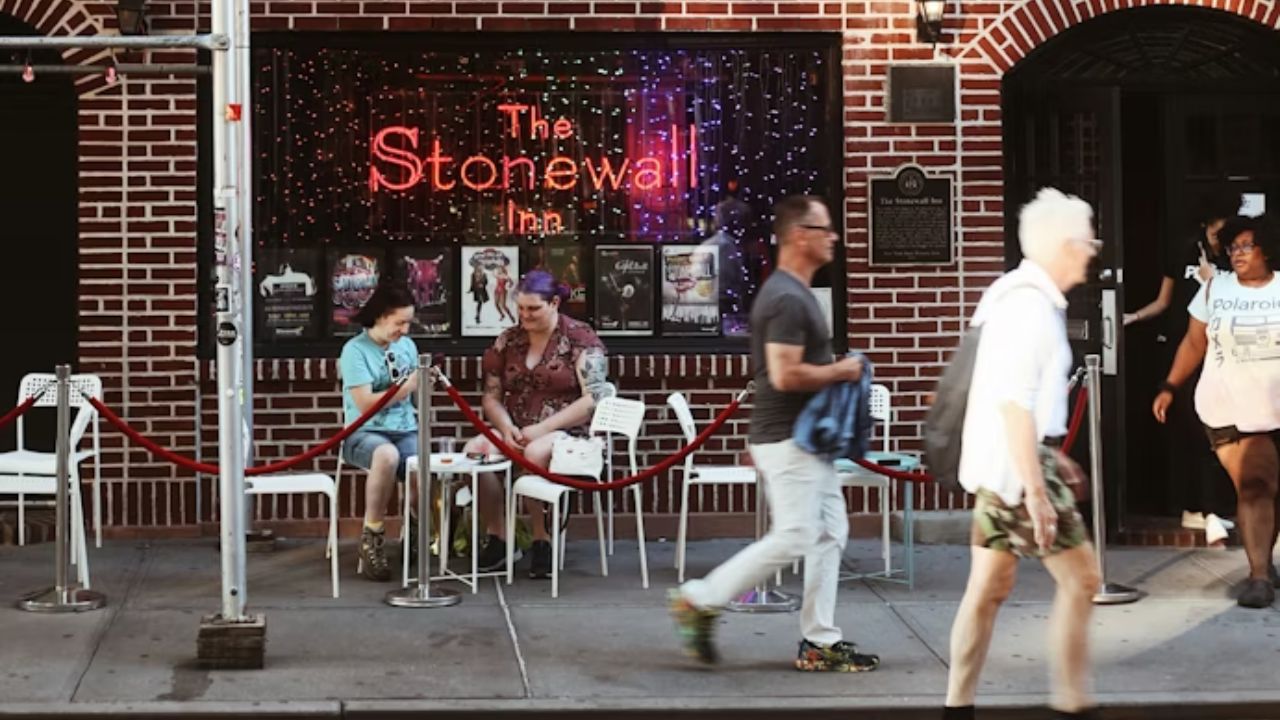 In 1969, the Stonewall Inn on Christopher Street was the site of the Stonewall Riots, a series of clashes between bar patrons and the New York Police Department that effectively launched the modern LGBTQ rights movement. The bar is now a National Historic Landmark and, honestly, one of the most quietly powerful spots in the entire city.
Outside the inn, you’ll find Christopher Park, home of George Segal’s Gay Liberation Monument. Four white bronze figures depicting two same-sex couples. It’s understated, and it’s extraordinary.
For educational group tours, especially, this stop carries real weight. Groups tend to linger here. And they should. This isn’t a photo-op stop. It’s a history you can stand inside.
Our educational and arts-focused group tours often include Stonewall and Christopher Park with expert guides for meaningful context. See our educational/the arts tours for group options in NYC neighborhoods like the Village.
In 1969, the Stonewall Inn on Christopher Street was the site of the Stonewall Riots, a series of clashes between bar patrons and the New York Police Department that effectively launched the modern LGBTQ rights movement. The bar is now a National Historic Landmark and, honestly, one of the most quietly powerful spots in the entire city.
Outside the inn, you’ll find Christopher Park, home of George Segal’s Gay Liberation Monument. Four white bronze figures depicting two same-sex couples. It’s understated, and it’s extraordinary.
For educational group tours, especially, this stop carries real weight. Groups tend to linger here. And they should. This isn’t a photo-op stop. It’s a history you can stand inside.
Our educational and arts-focused group tours often include Stonewall and Christopher Park with expert guides for meaningful context. See our educational/the arts tours for group options in NYC neighborhoods like the Village.
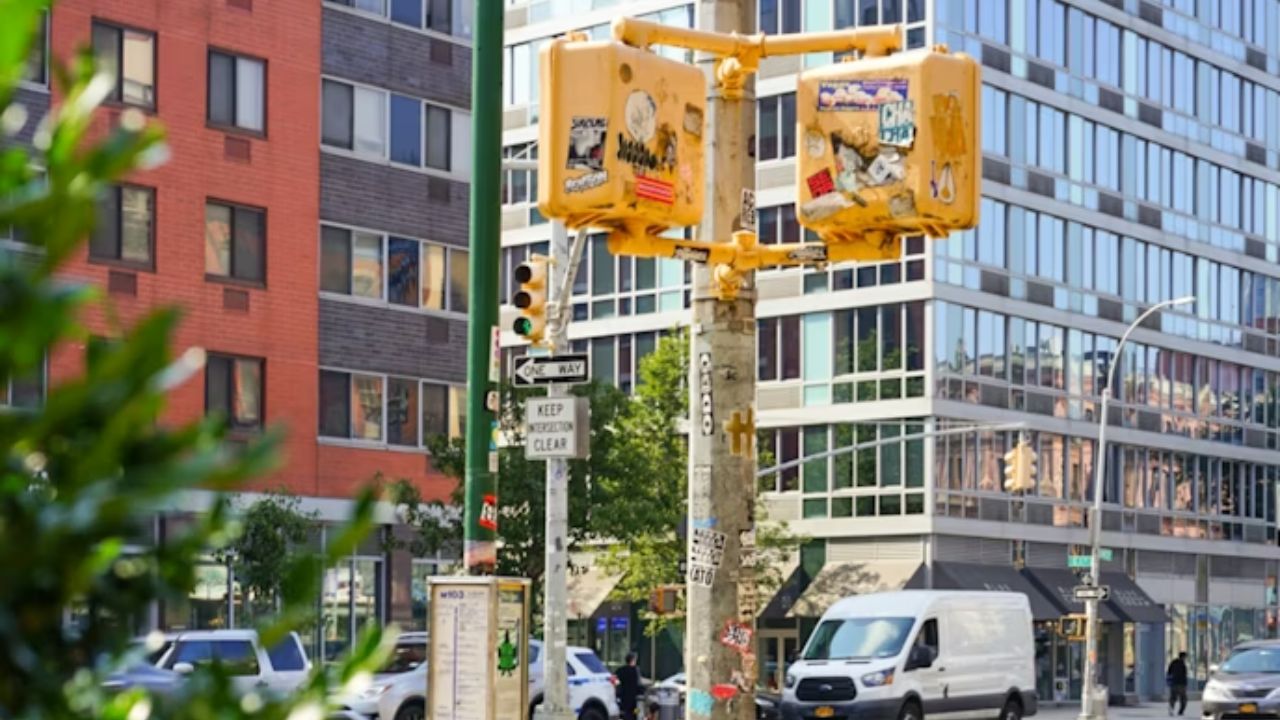 Bleecker Street is basically the spine of the West Village. Shopping, eating, wandering. It’s all here.
On the food side: Magnolia Bakery sits here, the one that became famous partly because Sex and the City kept going there (the banana pudding, not just the cupcakes, is the real order).
Murray’s Cheese at 254 Bleecker has been operating since 1940 and is the kind of cheese shop that turns casual visitors into people who mail-order aged Gruyère. They also run cheese classes. Which sounds niche but is reportedly great.
On the shopping side: independent boutiques, vintage stores, and some bigger brand names mixed in. It’s not overwhelming the way SoHo can be. It’s browsable. Manageable and enjoyable.
Honestly, even if you don’t buy a single thing, just walking Bleecker from one end to the other gives you a solid read on the character of the whole neighborhood.
Bleecker Street is basically the spine of the West Village. Shopping, eating, wandering. It’s all here.
On the food side: Magnolia Bakery sits here, the one that became famous partly because Sex and the City kept going there (the banana pudding, not just the cupcakes, is the real order).
Murray’s Cheese at 254 Bleecker has been operating since 1940 and is the kind of cheese shop that turns casual visitors into people who mail-order aged Gruyère. They also run cheese classes. Which sounds niche but is reportedly great.
On the shopping side: independent boutiques, vintage stores, and some bigger brand names mixed in. It’s not overwhelming the way SoHo can be. It’s browsable. Manageable and enjoyable.
Honestly, even if you don’t buy a single thing, just walking Bleecker from one end to the other gives you a solid read on the character of the whole neighborhood.
1. Just Walk the Cobblestone Streets First.
Before anything else. Put the phone away. Or at least stop refreshing it.
The best streets in the West Village are Grove Street, Perry Street, Christopher Street, Carmine Street and W 10th and 11th. These blocks are genuinely some of the prettiest in all of Manhattan. Ivy on brick. Gas-lamp style streetlights. Dogs with better haircuts than most people. It feels almost impossibly European for a city this loud and fast-moving.
Here’s the thing, though: half the magic of the West Village is in the accidental discovery. The tiny bookshop you didn’t plan on. The jazz is leaking out of a basement at 2pm on a Wednesday. The corner that looks exactly like a movie set (because it basically is one, more on that later).
Give yourself at least 30 minutes of pure wandering before pulling up any kind of map. It sounds obvious, but most visitors skip straight to the list and miss the whole point of the neighborhood.
Quick cheat sheet for the best streets:
| Street | Why It’s Worth Your Time |
| Grove Street | “Friends” exterior, stunning brownstones all the way down |
| Bleecker Street | Shopping, food, the classic West Village energy |
| Christopher Street | LGBTQ+ history, vibrant local scene, always something happening |
| Perry Street | Quieter, beautiful, Hudson River close by |
2. The Stonewall Inn.
In 1969, the Stonewall Inn on Christopher Street was the site of the Stonewall Riots, a series of clashes between bar patrons and the New York Police Department that effectively launched the modern LGBTQ rights movement. The bar is now a National Historic Landmark and, honestly, one of the most quietly powerful spots in the entire city.
Outside the inn, you’ll find Christopher Park, home of George Segal’s Gay Liberation Monument. Four white bronze figures depicting two same-sex couples. It’s understated, and it’s extraordinary.
For educational group tours, especially, this stop carries real weight. Groups tend to linger here. And they should. This isn’t a photo-op stop. It’s a history you can stand inside.
Our educational and arts-focused group tours often include Stonewall and Christopher Park with expert guides for meaningful context. See our educational/the arts tours for group options in NYC neighborhoods like the Village.
3. Caffe Reggio and the Cappuccino
Okay, so here’s an insane fact. Caffe Reggio, opened in 1927, was the first place in America to serve a cappuccino. 1927. Sitting inside this place with its dark wood paneling, antique paintings covering every inch of wall space, and the green-painted exterior that basically glows on a sunny day… it really does feel that old in the best possible way. The cappuccino is obviously mandatory. But if the ricotta cheesecake is available, get that too. The place is tiny, usually full, and always a little lively. Don’t rush through it. Caffe Reggio is the kind of spot that rewards sitting, not hurrying. For culinary tours? This is an anchor stop. There’s just so much story packed into one small cafe on MacDougal Street. For groups wanting to combine West Village cafe culture and Bleecker food spots with guided tastings, our culinary tours deliver exactly that. Check out our culinary tours for customizable NYC food experiences.4. Washington Square Park
Technically, this sits on the edge of Greenwich Village rather than the West Village proper, but it’s close enough that skipping it would be a genuine mistake. Washington Square Park has had multiple lives. In its earliest incarnation, it was a burial ground for yellow fever victims post-American Revolutionary War. Today, it’s NYU students doing homework next to chess hustlers next to a guy making South Indian dosas from a cart with a 20 person line (the dosas are incredible, that line moves fast, just get in it). It’s the best free show in New York City. No debate. And for groups, especially, it works beautifully as a gathering point or a natural break mid-itinerary. Bring a snack. Find a bench. Watch the city happen.5. Live Jazz. Like, Real Live Jazz.
The West Village has been a jazz neighborhood since before most living people were born. And here’s what’s great: it still is one. This isn’t a preserved historical artifact. The music is still happening. Three spots worth knowing:- Village Vanguard: This is the legendary one. Miles Davis recorded here. John Coltrane played here. It’s a basement club that looks almost disappointingly plain from the outside. Inside is something else entirely. Book ahead and arrive early for decent seats.
- Smalls Jazz Club: More intimate, more speakeasy energy. When it opened in 1994, it was literally BYOB with $10 shows running until dawn. Still has that underground feel. Great for first-timers.
- Arthur’s Tavern: A proper NYC tavern that’s been there since 1937. Sunday jazz nights. Cash only, $15 minimum spend per person. Unassuming from the outside. Absolutely worth it.
6. Bleecker Street
Bleecker Street is basically the spine of the West Village. Shopping, eating, wandering. It’s all here.
On the food side: Magnolia Bakery sits here, the one that became famous partly because Sex and the City kept going there (the banana pudding, not just the cupcakes, is the real order).
Murray’s Cheese at 254 Bleecker has been operating since 1940 and is the kind of cheese shop that turns casual visitors into people who mail-order aged Gruyère. They also run cheese classes. Which sounds niche but is reportedly great.
On the shopping side: independent boutiques, vintage stores, and some bigger brand names mixed in. It’s not overwhelming the way SoHo can be. It’s browsable. Manageable and enjoyable.
Honestly, even if you don’t buy a single thing, just walking Bleecker from one end to the other gives you a solid read on the character of the whole neighborhood.
7. Eat Somewhere That’s Been Around Forever
The restaurant scene in the West Village is competitive in a way that keeps even the old-timers sharp. A few that genuinely earn their reputation:- Joe’s Pizza: Established in 1975, originally from Naples. Classic New York slice. No gimmicks. Joe Pozzuoli, now 75, still owns and runs it. That kind of thing matters.
- Dante: Dates back to 1915. Two Australians revived it in 2015, and within a few years, it was named the best bar in the world (2019 and 2020). It’s also just a really good lunch spot. The Aperol Spritz situation here is taken seriously.
- Buvette: A tiny French-ish gastrotheque that basically runs 18 hours a day. No reservations. Usually a wait. Worth it.