Cherry blossoms. That’s what the majority of people associate the most with Washington.
However, here is a secret that no one tells you. Washington DC in April has so much more to offer than just pink trees and beautiful moments for social media. Of course, the blossoms are significant. They are gorgeous, they have received worldwide recognition, and yes, getting that timing just right for the blooms is like winning a lottery. But if you take a flower walk in the capital city for a whole month, you might miss the point.
First-time visitors in April discover the pleasant surprise that not many people talk about. Most of the time, the weather is friendly. There are crowds, but they are not yet at the level of insanity of summer. Museums have more room to breathe. Monuments give greater possibilities for reflection rather than being your way to the front for a photo only.
Weather Plays Games (But Winnable Ones)
Nobody’s promising perfect conditions. April in DC doesn’t work that way.
Temperature swings happen daily, sometimes hourly. Morning might start at 45°F, feeling borderline cold. By afternoon? Could hit 70°F and feel absolutely perfect. The next day reverses everything. Highs averaging around 67°F sound pleasant enough, but that average hides wild fluctuations.
What the Weather Actually Does:
Element | Reality Check |
Average High | 67°F (but can reach 80°F+ or stay at 55°F) |
Average Low | 44°F (occasionally dips to 35°F) |
Rain Days | 10-11 days per month |
Precipitation | About 3.5 inches spread across those days |
Sunshine Hours | Roughly 8 hours daily when it cooperates |
Rain shows up frequently but rarely ruins entire days. More like surprise showers that pop up for an hour, soak everything, then disappear. Frustrating? Sometimes. Trip destroying? Not really.
What is the real advantage of April weather? Summer humidity hasn’t arrived yet. Walking the National Mall in July feels like swimming through hot soup. April? Comfortable enough that multiple museum visits in one day don’t require Olympic-level endurance.
Pack layers. Accept unpredictability. Move on.
The Cherry Blossom Reality Nobody Explains Properly
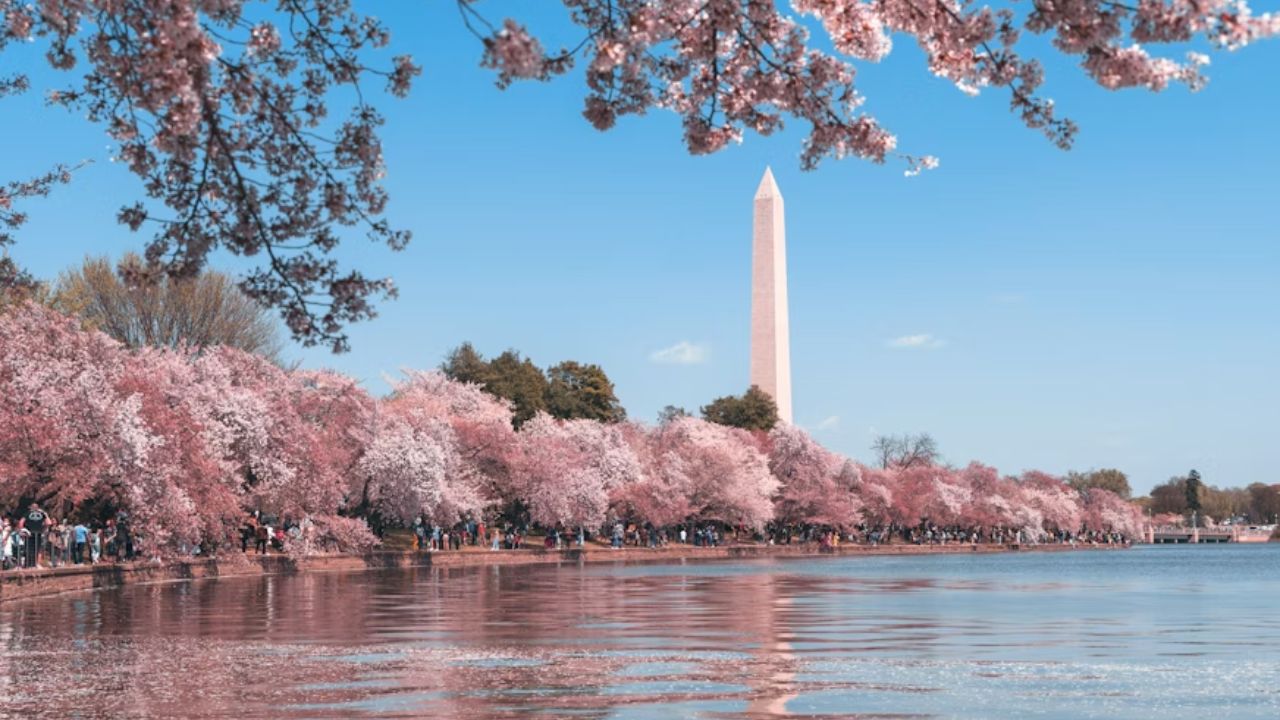
Everyone obsesses over cherry blossom timing. Fair enough. The National Cherry Blossom Festival runs from late March through mid April specifically because peak bloom usually falls somewhere in that window.
Usually being the operative word.
Peak bloom averages around April 4, but that average means almost nothing. Some years hit late March. Others push into mid-April. Weather patterns in the weeks leading up to bloom determine everything. Warm March? Early bloom. Cold snap? Delayed bloom.
Festival Timeline for 2025:
- Festival dates: March 20 to April 13
- Predicted peak bloom: March 28 to March 31
- Parade: April 12
- Major crowds: Weekend of peak bloom
The actual peak bloom window lasts maybe a week, ten days maximum, before petals start carpeting the ground and the show basically ends. Timing this perfectly requires either flexible travel dates or pure luck.
But here’s what first-timers should actually know. The Tidal Basin gets absolutely mobbed during peak bloom weekends. We’re talking 1.6 million people descending on DC during festival weeks. The weekend when bloom hits peak? Forget personal space. Forget quick photos. Forget anything resembling a calm experience.
Best Cherry Blossom Viewing Strategies:
- Hit the Tidal Basin on weekday mornings (crowds stay manageable)
- Explore Kenwood neighborhood in Bethesda for later-blooming Kwanzan cherries
- Check out the National Arboretum for varieties that bloom at different times
- Consider predawn visits for photographers (seriously magical light, almost nobody around)
And honestly? If the bloom timing doesn’t align with travel dates, Washington DC in April still delivers plenty worth experiencing. The city doesn’t shut down just because the cherry blossoms finish their show.
Museums Without Summer Madness
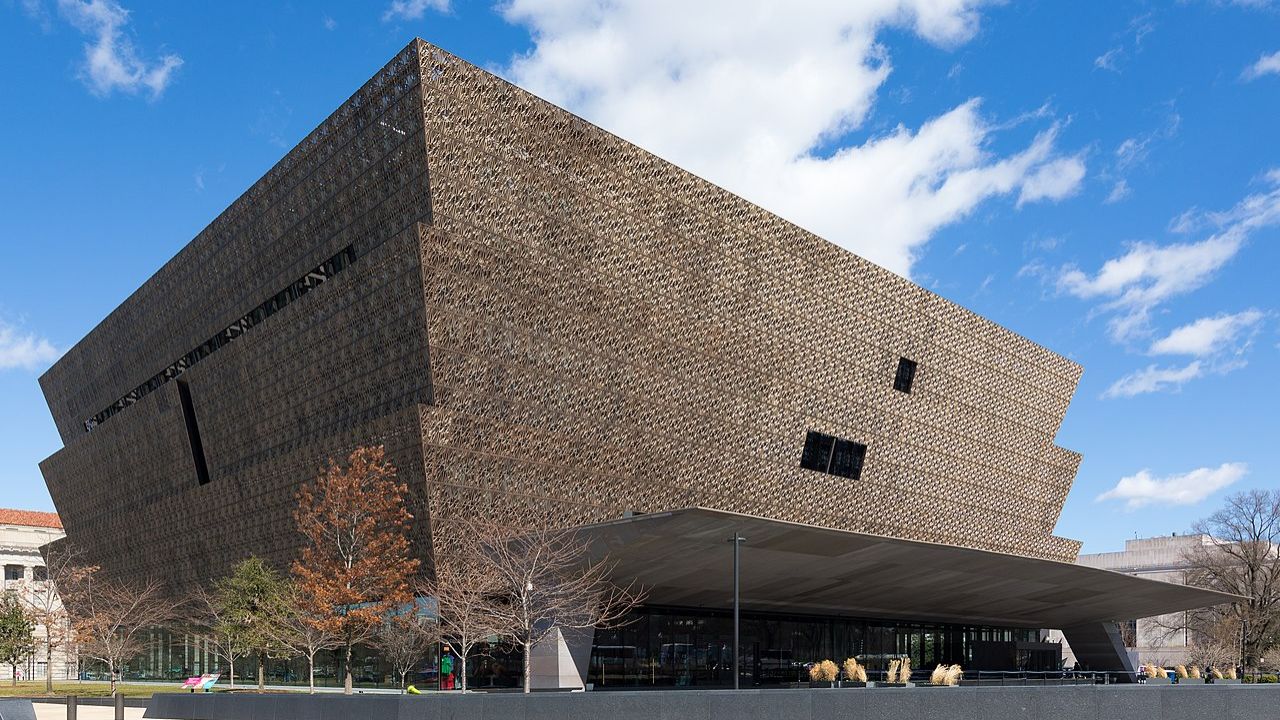
Smithsonian museums cost nothing. Zero. That fact alone makes DC special.
Nineteen Smithsonian museums spread across the city, covering everything from natural history to air and space to African American culture. All free. All world-class. All are significantly more enjoyable in April than in summer.
Must-Visit Museums for First-Timers:
- National Museum of African American History and Culture (requires timed entry tickets, book weeks ahead)
- National Air and Space Museum (recently renovated, incredible even for non-aviation nerds)
- National Museum of Natural History (Hope Diamond still draws crowds, but dinosaurs steal the show)
- National Museum of American History (pop culture meets actual history, surprisingly engaging)
- National Gallery of Art (houses the only Leonardo da Vinci painting in the Americas)
April crowds stay reasonable compared to summer school groups that pack every gallery from Memorial Day onward. Museums feel like museums. Galleries allow contemplation. Exhibits don’t require fighting through six-deep crowds just to read a plaque.
Some museums require advance timed tickets even in April. The African American History Museum always needs reservations. The Air and Space Museum recently started requiring them, too. Book these early. Like, weeks before visiting early.
Other Smithsonian locations? Just walk in. Security checks happen at every entrance (metal detectors, bag screening), but once inside, explore at whatever pace makes sense.
Non-Smithsonian Museums Worth Attention:
- International Spy Museum (admission charged, totally worth it, Bond in Motion exhibit runs through 2025)
- Museum of the Bible (privately funded, eight floors, rooftop Biblical garden)
- The Newseum closed permanently (RIP to what was an incredible journalism museum)
- Phillips Collection (the first museum of modern art, Van Gogh, Monet, Picasso)
Pro move? Plan museum visits for rainy days. April delivers enough surprise showers that having indoor backup options prevents wasted vacation time sitting in hotel rooms watching weather apps.
To explore the Art Museum steps, galleries, and nearby Fairmount Park with expert context and no crowds, join one of our guided museum and historic tours; explore options at our Educational/Art tours.
Monuments Actually Feel Meaningful
Summer crowds turn monument visits into endurance tests. Shuffling through masses of tourists while trying to read inscriptions and feel some connection to history? Doesn’t work.
April changes that dynamic completely.
The National Mall stretches from the Capitol to the Lincoln Memorial, roughly two miles of monuments, memorials, and green space. Sounds walkable. It is walkable. It just takes longer than expected because everything sits farther apart than it looks.
Can’t-Miss Monuments:
- Lincoln Memorial (especially powerful, especially at night)
- Vietnam Veterans Memorial (the black wall hits differently in person)
- World War II Memorial (fountain area, impressive scope)
- Korean War Memorial (haunting sculptures, often overlooked)
- Martin Luther King Jr. Memorial (relatively new, beautifully designed)
- Jefferson Memorial (cherry blossoms frame it perfectly)
- Washington Monument (555-foot obelisk, timed tickets required for elevator rides to top)
Night visits change everything. Monuments stay lit 24 hours. Crowds thin significantly after dark. The whole experience shifts from tourist obligation to genuinely moving encounters with history.
Start around dusk. Watch the lights come on. Walk the Mall as temperatures drop and crowds disappear. Brings a different energy entirely.
The Festival Beyond Just Flowers
National Cherry Blossom Festival activities include a lot more than simply admiring the trees. The parade on April 12 will feature floats, gigantic balloons, marching bands, and celebrity entertainers. Consider the Macy’s Thanksgiving parade, only with cherry blossom themes and slightly less crowded.
Constitution Avenue is closed from 7th to 17th Streets. The crowd fills up both sides of the street. The Blossom Kite Festival is one of the first events of the festival.
Hundreds of kites soar above the Washington Monument. A free, family-friendly event that is simply spectacular on a sunny day. Pink Tie Party at Union Station is an elegant, cocktail reception style event for those who would like to celebrate in formal attire. Tickets are required, the dress code is encouraged (wear pink), and the event is much more sophisticated than most of the festival events.
Sakura Matsuri Japanese Street Festival turns Pennsylvania Avenue into a joyous occasion of Japanese culture. Food vendors, performances, and demonstrations. It occurs on the same weekend as the parade. It gets very busy, but it’s worth the experience.
Getting Around Makes Sense
The DC Metro system works efficiently for tourists. Clean stations. Clear signage. Trains run frequently enough during April that wait times stay minimal.
Metro Basics:
Aspect | What First-Timers Need to Know |
SmarTrip Card | Purchase at any station, reloadable, required for entry |
Lines That Matter Most | Red (Union Station to Dupont Circle), Blue/Orange/Silver (Smithsonian to Capitol South) |
Cost | $2-$6 per trip depending on distance and time of day |
Peak Pricing | Weekday rush hours cost more |
Most major tourist sites cluster around Metro stations. Smithsonian station dumps visitors right onto the National Mall. L’Enfant Plaza connects to multiple lines. Arlington Cemetery has its own stop on the Blue Line.
Walking beats the Metro for short distances, though. Downtown DC was designed around walking. Streets make sense (numbered streets run north-south, lettered streets run east-west, state-named avenues cut diagonally). The National Mall is literally a giant park perfect for strolling.
Taxis and rideshares work fine, but add up quickly. Traffic during festival weeks gets genuinely awful, especially around the Tidal Basin areas. Metro or walking makes more sense financially and often time-wise too.
Capitol and White House Reality Check
Both buildings define DC’s identity. Both require advance planning. Neither offers guaranteed access.
U.S. Capitol tours run free daily but need advance reservations. Book through the Capitol Visitor Center website. Tours fill up fast during April because of spring break crowds. Aim for booking several weeks ahead.
The tour itself covers the building’s history, architecture, and function. Guides explain how Congress works, point out historical details, and lead groups through the Rotunda and National Statuary Hall. It takes about an hour. Photography is allowed in most areas.
Visiting House or Senate galleries when Congress is in session? Requires separate arrangements through a Congressional office. Worth doing if schedules align.
White House tours operate differently. American citizens must request tours through their Congressional representative at least 21 days in advance. International visitors go through their embassy in Washington. Both processes require security clearance.
Tours happen only on Friday and Saturday mornings. Run self-guided through specific rooms on the ground and state floors. No phones, no cameras, no bags. Security screening makes airport checks look relaxed.
Can’t get a White House tour? The People’s House across the street offers a high-tech interactive alternative. Free admission, timed tickets, state-of-the-art exhibits showing what’s inside the actual White House. Not the same as seeing the real thing, but considerably better than just photographing the exterior.
Food Scene Delivers
DC dining goes way beyond tourist trap restaurants near monuments.
Reading Terminal Market… wait, that’s Philadelphia. DC doesn’t have that specific market.
What does DC have? Union Market. Eastern Market. Dozens of neighborhoods where locals actually eat.
Neighborhoods Worth Exploring:
- Georgetown (historic, upscale, waterfront dining)
- Adams Morgan (international cuisine, nightlife)
- U Street Corridor (Ethiopian food, music venues, historically significant)
- Capitol Hill (Eastern Market area, Barracks Row restaurants)
- Dupont Circle (cafe culture, diverse options)
Ethiopian food in DC specifically stands out. The city has one of the largest Ethiopian populations outside Ethiopia. U Street and Adams Morgan neighborhoods host multiple excellent Ethiopian restaurants. Injera, wot, vegetarian combinations. All exceptional.
Half-smokes at Ben’s Chili Bowl on U Street qualify as DC’s signature food. Been around since 1958. Cash only. The line moves quickly. Get the half-smoke with chili. Don’t overthink it.
April brings outdoor dining back to most restaurants. Sidewalk seating reopens. Rooftop bars start operating again. The weather cooperates often enough that al fresco dining actually works most evenings.
Practical Details That Actually Matter
Washington DC in April attracts serious crowds, but nothing compared to summer or holiday weekends. Hotel availability stays reasonable if booked a month or two ahead. Prices haven’t hit peak season rates yet.
Security checks happen everywhere. Museums, monuments, and government buildings all require metal detectors and bag screening. Leave the snacks behind. Most places allow water bottles (must be empty through security). The Capitol and White House ban even water.
Early arrivals win. Monuments at 7 AM? Almost empty. Museums, when doors open at 10 AM? Manageable crowds. Tidal Basin at sunrise during cherry blossom peak? Magical and relatively peaceful.
Comfortable walking shoes aren’t optional. The National Mall alone covers miles. Adding museum visits, monument walks, and neighborhood exploration? Easily hit 15,000+ steps daily without trying.
Free water refills through the TapIt program at 750+ locations citywide saves money and reduces plastic waste. DC tap water tastes fine. Refill instead of buying $4 bottles at every tourist spot.
Budget Breakdown:
- Museums: Free (Smithsonian), $25-$35 (Spy Museum, Museum of Bible)
- Metro: $50-$75 for week of unlimited travel
- Food: $15-$25 per meal (budget), $30-$50 (mid-range)
- Hotel: $150-$300 per night (April rates)
Why April Actually Works
Here’s the honest assessment. Washington DC in April trades guaranteed perfect weather for significantly better everything else.
Smaller crowds mean museums feel like museums instead of overcrowded hallways. Monuments allow contemplation. Restaurants take walk-ins. Metro trains have seats available. The city breathes easier.
Cherry blossoms add spectacle when timing works. When it doesn’t? The city still functions as an incredible first-time destination. Monuments don’t disappear. Museums don’t close. History doesn’t become less significant just because pink petals aren’t floating through the air.
First-time visitors during April get to experience DC as it should be. Accessible without being overwhelming. Busy without being mobbed. Educational without feeling like homework.
Pack layers. Book museums requiring reservations early. Accept that the weather might throw curveballs. Plan some flexibility each day.
Then just experience it. The monuments, the museums, the neighborhoods, the food, the history are present everywhere. Cherry blossoms or not, April gives first-timers the best possible introduction to the nation’s capital.
Worth the trip? Absolutely. Just bring a rain jacket.
If you’re planning your first Philadelphia trip in April and want guided insights into cherry blossoms, historic sites, museums, and spring energy without the hassle, contact us to customize your perfect itinerary at our contact page.
FAQs
When do the cherry blossoms peak in Washington DC in April?
Peak bloom varies, but often early to mid April. For 2026, the festival runs from March 20 to April 12. Check National Park Service predictions closer to the date. Warm spells speed it up.
What’s the best way to get around Washington DC for first-time visitors?
Metro is reliable and covers key spots. Get a SmarTrip card. Or hop on hop off trolleys for narrated ease. Walking the Mall’s great, biking too. Avoid driving; parking’s a hassle.
What should I pack for a trip to Washington DC in April?
Layers for variable weather: light jacket, tees, sweater. Comfy walking shoes. Umbrella or rain jacket. Sunscreen and a hat for sunny days. A portable charger, as you’ll snap endless photos.